Uganda The Pearl Of Africa

Culture Name   

Ugandan

Orientation   

Identification. 

Lake Kyoga serves as a rough boundary between Bantu speakers in the south       and Nilotic and Central Sudanic language speakers in the north. Despite       the division between north and south in political affairs, this linguistic       boundary actually runs roughly from northwest to southeast, near the       course of the Nile. However, many Ugandans live among people who speak       different languages, especially in rural areas. Some sources describe       regional variation in terms of physical characteristics, clothing, bodily       adornment, and mannerisms, but others claim that those differences are       disappearing.

Location and Geography.   

Bantu speakers probably entered southern Uganda by the end of the first       millennium. They had developed centralized kingdoms by the fifteenth or       sixteenth century, and after independence from British rule in 1962, Bantu       speakers constituted roughly two-thirds of the population. They are       classified as either Eastern Lacustrine or Western Lacustrine Bantu. The       Eastern Lacustrine Bantu speakers include the Baganda people whose       language is Luganda, the Basoga, and many smaller societies in Uganda,       Tanzania, and Kenya. The Western Lacustrine Bantu speakers include the       Banyoro, the Bastoro, the Banyankole, and several smaller populations in       Uganda.             Nilotic language speakers probably entered the area from the north       beginning about                 C.E.               1000. Thought to be the first cattle-herding people in the area, they       also relied on crop cultivation. The largest Nilotic populations in Uganda       are the Iteso and Karamojong ethnic groups, who speak Eastern Nilotic       languages, and the Acholi, Langi, and Alur, who speak Western Nilotic       languages. Central Sudanic languages, which arrived in Uganda from the       north over a period of centuries, are spoken by the Lugbara, the Madi, and       a few small groups in the northwestern part of the country.

Demography. 

The population was about twenty-three million in mid-1999. The Eastern       Lacustrine Bantu include the Baganda, the Basoga, and the Bagisu. The       Baganda, the largest ethnic group, account for about 17 percent of the       population, or approximately 3.9 million people. The second largest ethnic       group, the Basoga, make up about 8 percent of the population, or 1.8       million people, while the Bagisu constitute roughly 5 percent of the       population, or just over a million people. The Western Lacustrine       Bantu—the Banyoro, Batoro, and Banyankole people—probably       constitute around 3 percent of the population, or 700,000 people each.             The Eastern Nilotic language groups include the Karamojong cluster, the       Iteso and the Kakwa. The Karamojong account for around 12 percent of the       population (2.8 million), the Iteso amount to about 8 percent (1.8       million), and the Kakwa constitute 1 percent (about 230,000). The Western       Nilotic language groups include the Langi and Acholi as well as the Alur.       Together they account for roughly 15 percent of the population, or about       3.4 million people, with the Langi contributing 6 percent (1.4 million),       the Acholi 4 percent (900,000), and the Alur probably about 2 percent       (460,000).             Central Sudanic languages are spoken by about 6 percent of the population,       mostly in the northwest. The Lugbara (roughly 3.8 percent of the total, or       870,000) and the Madi (roughly 1.2 per cent, or 275,000) are the largest       of these groups, representing the southeastern corner of a belt of Central       Sudanic language speakers stretching from Chad to Sudan.             About 10,000 Ugandans of Sudanese descent are classified as Nubians. They       are descendants of Sudanese military recruits who came in the late       nineteenth century as part of the colonial army. Rwandans, who constituted       almost 6 percent of the                        Uganda                     population (more than one million) in the late 1950s, included Hutu and       Tutsi groups. The government attempted to limit Rwandan influence by       restricting those who lacked Ugandan citizenship to refugee camps and       expelling some to Tanzania. In the late 1980s, more than 120,000 Rwandans       were recognized as refugees. Asians, who in the 1969 census amounted to       some seventy thousand people, mainly of Indian and Pakistani descent, were       officially considered foreigners despite the fact that more than half were       born in Uganda. After independence and especially when the Obote       government threatened to nationalize many industries in 1969, Asians       exported much of their wealth and were accused of graft and tax evasion.       President Idi Amin deported about seventy thousand Asians in 1972, and       only a few returned in the 1980s to claim their expropriated land,       buildings, factories, and estates. In the 1990s, there were about ten       thousand Asians in the country.

Linguistic Affiliation.   

Introduced by the British in the late nineteenth century, English was the       language of colonial administration. After independence, it became the       official language, used in government, commerce, and education. Official       publications and most major newspapers appear in English, which often is       spoken on radio and television. Most residents speak at least one African       language. Swahili and Arabic also are widely spoken.

History and Ethnic Relations

Emergence of the Nation.                  After independence in 1962, ending a period of colonization that began in       1885, there was little indication that the country was headed for social       and political upheaval. Instead, Uganda appeared to be a model of       stability and progress. It had no white settler class attempting to       monopolize the cash crop economy, and there was no legacy of conflict. It       was the African producers who grew the cotton and coffee that brought a       higher standard of living, financed education, and led to high       expectations for the future.             Independence arrived without a national struggle against the British, who       devised a timetable for withdrawal before local groups had organized a       nationalist movement. This near absence of nationalism among the       country’s ethnic groups led to a series of political compromises.

 National Identity.   

Ethnic and religious divisions as well as historical emnities and       rivalries contributed to the country’s disintegration in the 1970s.       There was a wide gulf between Nilotic speakers in the north and Bantu       speakers in the south and an economic division between pastoralists in the       drier rangelands of the west and north, and agriculturists, in the       better-watered highland and lakeside regions. There was also a historical       division between the centralized and sometimes despotic rule of the       ancient African kingdoms and the kinship-based politics elsewhere. The       kingdoms were often at odds in regard to the control of land. During the       colonial period, the south had railways, cash crops, a system of Christian       mission education, and the seat of government, seemingly at the expense of       other regions. There also were religious groups that had lost ground to       rivals in the past, for example, the domination of Muslims at the end of       the nineteenth century by Christians allied to British colonialism. All       these divisions precluded the formation of a national culture.

Ethnic Relations.     

After independence, there were conflicting local nationalisms. The       Buganda’s large population, extensive territory in the favored       south, and self-proclaimed superiority created a backlash among other       Ugandan peoples. Nubians shared little sense of identification with other       groups. The closely related peoples of nearby Zaire and the Sudan soon       became embroiled in civil wars in the 1960s and 1970s, drawing in       ethnically related Ugandans. Today relations are relatively harmonious.       However, suspicion remains with the president believing to favor certain       groups from the west of the country over others.

Food and Economy     

Food in Daily Life.                  Most people, except a few who live in urban centers, produce their own       food. Most people eat two meals a day: lunch and supper. Breakfast is       often a cup of tea or porridge. Meals are prepared by women and girls; men       and boys age twelve and above do not sit in the kitchen, which is separate       from the main house. Cooking usually is done on an open wood fire. Popular       dishes include                 matoke               (a staple made from bananas), millet bread, cassava (tapioca or manioc),       sweet potatoes, chicken and beef stews, and freshwater fish. Other foods       include white potatoes, yams, corn, cabbage, pumpkin, tomatoes, millet,       peas, sorghum, beans, groundnuts (peanuts), goat meat, and milk. Oranges,       papayas, lemons, and pineapples also are grown and consumed. The national       drink is                 waragi              , a banana gin. Restaurants in large population centers, such as Kampala       (the capital), serve local foods.

  Basic Economy.

Most food is produced domestically. Uganda exports various foodstuffs,       including fish and fish products, corn, coffee, and tea. The environment       provides good grazing land for cattle, sheep, and goats. Agriculture is       the most important sector of the economy, employing over 80 percent of the       workforce. Much production is organized by farmers’ cooperatives.       Smallholder farmers predominated in the 1960s and 1970s but declined as a       result of civil conflict. In the 1980s, the government provided aid to       farmers, and by the middle of the decade nearly a hundred ranches had been       restocked with cattle.             Lakes, rivers and swamps cover about 20 percent of the land surface, and       fishing is an important rural industry. The basic currency is the       shilling.                   Land Tenure and Property.                  At independence, the country was a patchwork of district administrations       subdivided into counties and consolidated into                        Grand Mosque of Kampala. Roughly 15 percent of Ugandans are Muslims                     provinces. As a result of a treaty with the British in 1900, Uganda       retained its monarchy together with a modified version of its government       and a distinctive form of quasi-freehold land tenure. Land was divided       between the protectorate government and the kabaka (king), chiefs, and       other tribal notables. This                 mailo               land quickly became an important element in the colonial farming economy.             Uganda has a long history of diverse laws and social systems governing       land tenure. Since the promulgation of the Land Reform decree of 1975,       only two systems of land tenure exist (leasehold and customary tenure),       but in practice a complex mixture of systems (including customary,       leasehold, and freehold) continue to exist. The government attempted to       simplify and unify the land tenure system. A major development in that       process has been the inclusion of land tenure in the constitution of 1995.       However, issues such as women’s right to own land require further       consideration.

Commercial Activities.

The major goods and services produced for sale are foodstuffs and cash       crops for exportation, with coffee as the major export crop. Uganda       escaped widespread famine in the late 1970s and 1980s because many people,       including urban residents, resorted to subsistence cultivation. Both       commercial and subsistence farming operated         in the monetary and nonmonetary sectors, presenting the government with       problems of organization and taxation. By the late 1980s, government       reports estimated that about 44 percent of gross domestic product (GDP)       originated outside the monetary economy. Most nonmonetary activity was       agricultural.

Major Industries.   

When the present government seized power in 1986, industrial production       was negligible, consisting mostly of the processing of crops and the       production of textiles, wood and paper products, cement, and chemicals.       Industry was a small part of GDP in the late 1980s, operating at       approximately one-third of the level of the early 1970s. Under Museveni,       there has been some industrial rejuvenation, although this has amounted to       not much more than the repair of damage done during the civil war to the       industrial infrastructure. The sugar industry was rehabilitated through       joint ventures involving the private sector and the government. By the       1990s there was a refining capacity of at least 140,000 tons of sugar       annually. Other rehabilitated industries include beer brewing, tobacco,       cotton, and cement. About 4 percent of adults worked in industry by the       1990s. During the 1990s, industrial growth was 13.2 percent.

Trade.                  In 1998, the country exported products worth $575 million. The main       export commodities were coffee (54 percent of the total value), gold, fish       and fish products, cotton, tea, and corn. The countries receiving most of       these products were Spain, Germany, the Netherlands, France, and Italy.       The main imports include chemicals, basic manufactured goods, machinery,       and transport equipment.

Division of Labor.                  In the mid-1990s the labor force was estimated to be about 8.5 million,       with more than 85 percent working in agriculture, 4 percent in industry,       and 10 percent in the services sector. Jobs are allocated according to       ability and preference.

Social Stratification 

Classes and Castes.                  Although there are no castes, there is a relatively high degree of social       inequality. In the mid-1990s, 55 percent of the population lived below the       poverty line. The top 10 percent owned about one-third of the available       wealth, while the bottom 10 percent owned 3 percent. Wealth distribution       is governed by class position. The richest people live mostly in the       capital, Kampala.                   Symbols of Social Stratification.                  Social stratification is governed primarily by level of education and       status derived primarily from employment. Among the elites, English is the       language of communication, and these people dress in a modern Western       fashion. Others tend to wear traditional dress.

Political Life   

Government.                  Under the constitution of 1995, legislative power is in the hands of a       unicameral parliament (the National Resistance Council) with 276 members       (214 elected directly and 62 appointed). Executive powers are held by the       president, who is directly elected for a five-year term. On coming to       power in 1986, the government introduced “no-party”       democracy known as the “movement system” with a national       network extending from the capital to the rural areas. Only one political       organization, formerly the National Resistance Movement (or NRM) and now       known as the “Movement,” is recognized; it is the party of       President Museveni. Among the parties that exist but are not allowed to       sponsor candidates, the most important are the Ugandan People’s       Congress (UPC), the Democratic Party (DP), and the Conservative Party       (CP).

Leadership and Political Officials.   

It is alleged that one of the main criteria for advancement in the       current government is whether an individual fought in President       Museveni’s guerrilla army, which was instrumental in bringing the       regime to power in 1986. Those people are said to have achieved their       positions through a combination of hard work, influence peddling, and       corruption.

Social Problems and Control.

After the victory of the National Resistance Army (NRA) in 1986, the NRA       assumed responsibility for internal security. The police force was       reorganized and, together with other internal security organs, began to       enforce law and order in all districts except those experiencing rebel       activity. There are two continuing civil wars against the       “Lord’s Resistance Army” and against guerrillas based       in the Sudan. In 1995, the government established a legal system based on       English common law and customary law. There is a court of appeal and a       high court, both with judges appointed by the president. The most common       crimes are theft and, in some parts of the country, banditry.

Military Activity. 

Uganda has an army, a navy, and an air force. The NRA has about seventy       thousand troops. Recruitment is voluntary; there is no fixed term of       service, and both men and women serve. In 1999, Ugandan military forces       supported the rebel forces in the civil war in the Democratic Republic of       Congo.                       Women preparing food in Kampala. All meals are prepared by women in             Uganda; boys over age twelve are banned from the kitchen.

Social Welfare and Change Programs   

In 1987, the government launched a four-year Rehabilitation and       Development Plan to restore the nation’s productive capacity,       especially in industry and agriculture, and rehabilitate the social and       economic infrastructure. The plan targeted industrial and agricultural       production, transportation, and electricity and water services,       envisioning an annual 5 percent growth rate. Transportation would receive       the major share of funding, followed by agriculture, industry and tourism,       social infrastructure, and mining and energy. Although the international       financial community provided debt rescheduling and new loans, the level of       economic recovery was modest. Improved security and private sector       development contributed to economic growth and the rehabilitation of the       social infrastructure in the 1990s, but external shocks, an overvalued       currency, and high government spending limited economic progress.

Nongovernmental Organizations and Other Associations 

Political conflict and the near disintegration of the state under Milton       Obote and Idi Amin in the 1970s and early 1980s, led to the incorporation       of autonomous self-help organizations and nongovernmental organizations       (NGOs). Foreign and indigenous NGOs concerned with developmental, social,       and political goals have flooded Uganda since the mid-1980s. In general,       NGOs have been effective in addressing the needs of service provision and       alleviating poverty. For groups of traditionally disadvantaged people such       as physically disabled persons and women, NGOs have provided guaranteed       political representation at every level of the society.

Gender Roles and Statuses   

Division of Labor by Gender.                  Traditionally, women’s roles were subordinate to those of men       despite the substantial economic and social responsibilities of women in       traditional Ugandan societies. Women were taught to accede to the wishes       of their fathers, brothers, husbands, and other men and to demonstrate       their subordination to men in public life. Into the 1990s, women in rural       areas of Buganda were expected to kneel when speaking to a man. However,       women had the primary responsibility for child care and subsistence       agriculture while contributing to cash crop agriculture. Many Ugandans       recognized women as important religious leaders who sometimes had led       revolts that                        The people of Kalunga village celebrate the victory of Kintu Musoke             in the 1994 nonpartisan general election in Uganda.                     overthrew the political order dominated by men. In some areas, women       could own land, influence crucial political decisions made by men, and       cultivate cash crops.

The Relative Status of Women and Men.

In the 1970s and 1980s, political violence had a heavy toll on women.       Economic hardship was felt in the home, where women and children lacked       the economic opportunities available to most men. Women’s work       became more time-consuming, and the erosion of public services and       infrastructure reduced access to schools, hospitals, and markets. However,       some Ugandan women believed that the war years strengthened their position       in society, and the Museveni government has pledged to eliminate       discrimination against women. During the civil war, women were active in       the NRA. The government decreed that one women would represent each       district on the National Resistance Council, and the government owned       Uganda Commercial Bank established a rural credit plan to make farm loans       available to women.

 Marriage, Family, and Kinship 

Marriage.                  Family prosperity in rural areas involves the acquisition of wives, which       is accomplished through the exchange of bridewealth. Since the 1950s a       ceiling on bridewealth has been set at five cows and a similar number of       goats. The payment of bridewealth is connected to the fact that men       “rule” women. Polygynous marriages have reinforced some       aspects of male dominance but also have given women an arena for       cooperating to oppose male dominance. A man may grant his senior wife       “male” status, allowing her to behave as an equal toward men       and as a superior toward his other wives. However, polygynous marriages       have left some wives without legal rights to inheritance after divorce or       widowhood.

 Domestic Unit.                  The extended family is augmented by a kin group. Men have authority in       the family; household tasks are divided among women and older girls. Women       are economically dependent on the male next of kin (husband, father, or       brother). Dependence on men deprives women of influence in family and       community matters, and ties them to male relationships for sustenance and       the survival of their children.

  Inheritance.                  Land reform is a continuing aspect of constitutional debate. Suggestions       for a new land policy were part of the draft constitution submitted to the       president of the Constitutional Commission in late 1992, though little       consideration had been given to the issue of women’s right to own       and                        A woman winnowing grain in the Virunga National Park. More than 80             percent of the workforce is employed in agriculture.                     inherit land. Although women make a significant contribution in       agriculture, their tenure rights are fragile. The determination and       protection of property rights have become important issues as a result of       civil war and the impact of AIDS. However, the state’s legal stand       on inheritance recognizes the devolution of property through statutory as       well as customary law.             According to the law, a wife equally with a husband is entitled to 15       percent of the spouse’s estate after death. The practice, though,       is that in the majority of cases a man inherits all of his wife’s       property, while culture dictates that a woman does not inherit from her       husband at all. In other words, regarding inheritance, where there is       conflict between cultural unwritten law and the written modern law, the       cultural laws tend to take precedence.

Kin Groups.                  For many people, clan, lineage, and marriage provide the framework of       daily life and access to the most significant resources. Farming is       largely a family enterprise, and land and labor are available primarily       through kin.

Socialization 

Infant Care.                  Virtually all infant care is undertaken by women and older girls at home.

Child Rearing and Education.                  Mothers bore an average of over seven children in the late 1990s, and the       use of family planning is low. The death of children is commonplace, with       an estimated ninety deaths per one thousand live births. Boys are more       likely to be educated to the primary and secondary levels than are girls.       Among the 62 percent of the population that is literate, nearly       three-quarters are men.

Higher Education.                  Established in 1922, Makerere University in Kampala was the first college       in East Africa. Its primary aim was to train people for government       employment. In the 1980s, it expanded to include colleges of liberal arts       and medicine serving more than five thousand students. In the early 1990s,       there were about nine thousand students. The Islamic University at Mbale,       financed by the Organization of the Islamic Conference, opened in 1988.       This college provides Islamic educational services primarily to       English-speaking students from African countries. In 1989, a second       national university campus opened in Mbarara, with a curriculum designed       to serve rural development needs. Development plans for higher education       rely largely on international and private donors. Most residents value       higher education, perceiving it as an essential aspect of national       development.

Etiquette   

Shaking hands is the normal form of greeting. Casual dress is considered       appropriate in the daytime and evening. It is customary to give waiters       and taxi drivers a 10 percent tip. Etiquette is important at family meals.       When a meal is ready, all the members of the household wash their hands       and sit on floor mats. Visitors and neighbors who drop in are expected to       join the family at a meal. Normally a short prayer is said before the       family starts eating. During the meal, children talk only when asked a       question. It is considered impolite to leave the room while others are       eating. Leaning on the left hand or stretching one’s legs at a meal       is a sign of disrespect. When the meal is finished, everyone in turn gives       a compliment to the mother.

Religion   

Religious Beliefs.                  One-third of the population is Roman Catholic, one-third is Protestant,       and 16 percent is Muslim; 18 percent believe in local religions, including       various millenarian religions. World religions and local religions have       coexisted for more than a century, and many people have established a set       of beliefs about the nature of the universe by combining elements of both       types. There is a proliferation of religious discourses centering on       spirits, spirit possession, and witchcraft.

Religious Practitioners.                  Religious identity has economic and political implications: church       membership has influenced opportunities for education, employment, and       social advancement. Religious practitioners thus are expected to provide a       range of benefits for their followers. Leaders of indigenous religions       reinforce group solidarity by providing elements necessary for societal       survival: remembrance of ancestors, means of settling disputes, and       recognition of individual achievement. Another social function of       religious practitioners is helping people cope with pain, suffering, and       defeat by providing an explanation of their causes. Religious beliefs and       practices serve political aims by bolstering the authority of temporal       rulers and allowing new leaders to mobilize political power and implement       political change.

 Rituals and Holy Places.                  In Bantu-speaking societies, many local religions include a belief in a       creator God. Most local religions involve beliefs in ancestral and other       spirits, and people offer prayers and sacrifices to symbolize respect for       the dead and maintain proper relationships among the living. Mbandwa       mediators act on behalf of other believers, using trance or hypnosis and       offering sacrifice and prayer to beseech the spirit world on behalf of the       living.             Uganda has followers of Christianity, Islam, and African traditional       religions. Ugandan Muslims make pilgrimages to Mecca when they can.       Followers of African religions tend to establish shrines to various local       gods and spirits in a variety of locations.

Death and the Afterlife.                  Death is sometimes interpreted in the idiom of witchcraft. A disease or       other cause of death may not be considered the true cause. At a burial, if       the relatives suspect someone of having caused the deceased       person’s death, a spirit medium may call up the spirit of the       deceased and ask who really killed him or her.

Medicine and Health Care   

Health services deteriorated in the 1970s and 1980s, as a result of       government neglect, violence, and civil war. In the 1990s, measles,       respiratory tract infections, and gastro enteritis caused one-half of all       deaths attributed to illness, and malaria, AIDS, anemia, tetanus, whooping       cough, and respiratory tract infections also claimed many lives. Infant       mortality was often caused by low birth weight, premature birth, or       neonatal tetanus. The entire health care system was served by less than a       thousand doctors in the 1990s. Care facilities included community health       centers, maternity clinics, dispensaries, leprosy centers, and aid posts.       Today there is at least one hospital in each district except the southern       district of Rakai. In the sparsely populated northern districts, people       sometimes travel long distances to receive medical care, and facilities       are inferior to those in the south. Those who live far from or cannot       afford modern health care depend on traditional care. Women are prominent       among traditional healers.

Secular Celebrations 

The major holidays are New Year’s Day, 1 January; Liberation Day,       26 January; International Women’s Day, 8 March; Labor Day, 1 May;       National Heroes Day, 9 June; and Independence Day, 9 October.

The Arts and Humanities 

Support for the Arts.                  Most artists are self-supporting as there is virtually no state support.       Small-scale, local initiatives take place, but it has been                        A farm with terraced fields near Kibale. Coffee, cotton, tea, and             corn are among the most common agriculture exports.                     difficult to establish viable sectors because of the disruptions caused       by long-term political conflict and economic decline.                   Literature.                  The development of literature is at an early stage. It has been held back       by the years of civil war.                   Graphic and Performance Arts.                  Performing arts often are associated with different ethnic groups       throughout the country.

 The State of the Physical and Social Sciences     

The physical and social sciences are generally under-developed as a result       of civil instability and conflict and the development of other priorities       centered on national reconstruction. Makerere University is still in       operation but virtually all expatriate staff, once the backbone of the       teaching staff, have been long gone. Little research is currently       undertaken because of a lack of up-to-date books, journals, or computers.

Bibliography 

Abid, Syed, ed.                 Uganda Women in Development,               1990.             Allen, Tim. “Understanding Alice: Uganda’s Holy Spirit       Movement in Context.”                 Africa               61 (3): 37–39, 1991.             Antrobus, P. “The Empowerment of Women.”                 Women and International Development               1 (2): 189–207, 1989.             Bernt Hansen, Holger, and Michael Twaddle eds.                 Uganda Now: Between Decay and Development,               1988.             ——.                 Developing Uganda,               1998.             Bwegye, F. A. W.                 The Agony of Uganda,               1985.             Dicklich, Susan. “Indigenous NGOs and Political       Participation.” In Holger Bernt Hansen and Michael Twaddle, eds.                 Developing Uganda               145–158, 1998.             Furley, Oliver. “Uganda’s Retreat from Turmoil?,”                 Conflict Studies               196, 1986.             Gertzel, Cherry. “Uganda’s Continuing Search for       Peace.”                 Current History               89 (547): 205–228, 231–232, 1990.             Harlow, Vincent, and E. M. Chilver, eds.                 History of East Africa,               1965.             Ingham, Kenneth.                 The Making of Modern Uganda,               1983.             Jorgensen, Jan Jelmert.                 Uganda: A Modern History,               1981.             Kabwegyere, T. B.                 The Politics of State Formation and Destruction in Uganda,               3rd ed. 1995.             Kasfir, Nelson.                 The Shrinking Political Arena: Participation and Ethnicity in African         Politics,               1976.             ——. “Land and Peasants in Western Uganda: Bushenyi       and Mbarara Districts.” In Holger Bernt Hansen and Michael Twaddle,       eds.                 Uganda Now: Between Decay and Development,               1988.             Khadiagala, G. M. “State Collapse and Reconstruction in       Uganda.” In William I. Zartman, ed.                 Collapsed States,               1995.             Livingstone, Ian. “Developing Industry in Uganda in the       1990s.” In Holger Bernt Hansen and Michael Twaddle, eds.                 Developing Uganda,               1998.             Marquardt, Mark A., and Abby Sabina-Zziwa. “Land Reform in the       Making.” In Holger Bernt Hansen and Michael Twaddle, eds.                 Developing Uganda,               1998.             Mbowa, Rose. “Theatre for Development: Empowering Ugandans to       Transform Their Condition.” In Holger Bernt Hansen and Michael       Twaddle, eds.                 Developing Uganda,               1998.             Nsibambi, Apolo R. “The Restoration of Traditional Rulers.”       In Holger Bernt Hansen and Michael Twaddle, eds.                 From Chaos to Order: The Politics of Constitution-Making in Uganda,               1996.             Omara-Otunu, Amii.                 Politics and the Military in Uganda,               1987.             ——. “The Dynamics of Conflict in Uganda.” In       Oliver Furley, ed.                 Conflict in Africa,               1995.             Roberts, A. “The Sub-Imperialism of the Baganda.”                 Journal of African History               8 (3): 435–450, 1962.             Sathymurthy, T. V.                 The Political Development of Uganda,               1900–1986, 1986.             Southall, Aidan W. “Social Disorganization in Uganda: Before,       During, and After Amin.”                 Journal of Modern Africa Studies               18 (4): 627–656, 1980.             Tindigarukayo, Jimmy, K. “Uganda, 1979–85: Leadership in       Transition.”                 Journal of Modern African Studies               26 (4): 607–22, 1988.             Twaddle, Michael, ed.                 Expulsion of a Minority,               1975.             Van Zwanenburg, R. M. A, and Anne King.                 An Economic History of Kenya and Uganda,               1800–1970, 1975.             Watson, Catherine. “Uganda’s Women: A Ray of Hope.”                 Africa Report               33 (6): 32–35, 1988.             Welbourn, F. B.                 Religion and Politics in Uganda,               1952–1962, 1965.             Werbner, Richard.                 Ritual Passage, Sacred Journey,               1989.             World Bank.                 Uganda: Towards Stabilization and Economic Recovery,               1988.             ——.                 Uganda: The Economic Impact of AIDS,               1991.             ——.                 Uganda: Agriculture Sector Memorandum,               1991.               —J                EFF               H                AYNES

Read more: http://www.everyculture.com/To-Z/Uganda.html#ixzz4Di9mVIir
OL PEJETA CONSERVANCY

OUR STORY

Prior to 1970’s, Ol Pejeta was a highly developed and productive cattle ranch in which wildlife presence was thought to undermine the welfare of the cattle by competing for grazing as well as being disease vectors.

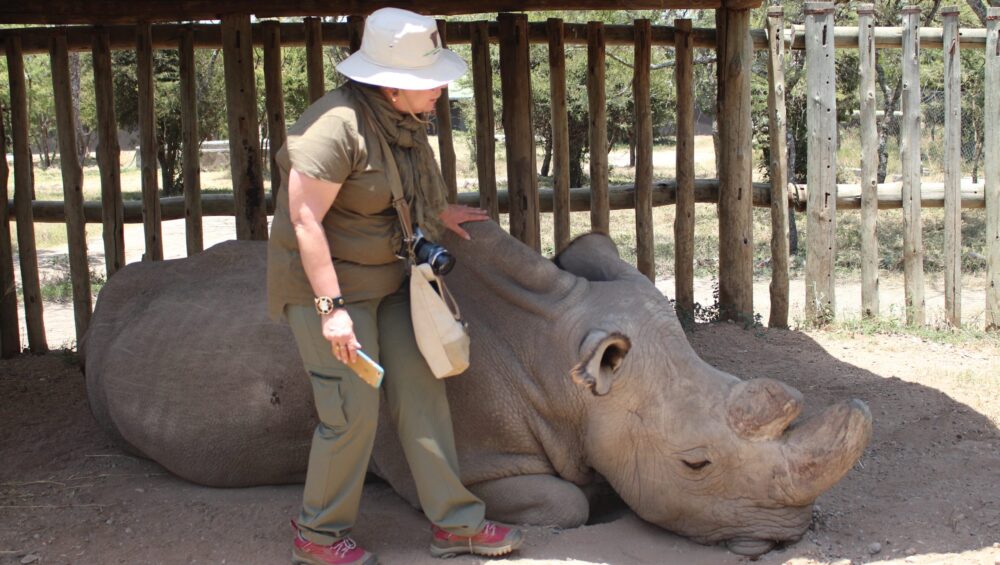
Ol Pejeta is now East Africa’s largest black rhino sanctuary as well as being home to Southern White Rhinos brought in from South Africa and thriving on the fertile open grasslands. It is also the only place in Africa to see Northern White Rhinos, a subspecies that once roamed the grasslands of northern Congo and southern Sudan but now on the brink of extinction. Ol Pejeta Conservancy is home to four of the last seven of this species left in the world. Our Location on the wildlife migration corridors of Kenya’s northern rangelands has the advantage of making us home to all the “Big Five” and we enjoy one of the highest predator densities in Kenya. We are also the only place in Kenya to see the chimpanzees which are located in a specially designed sanctuary set up by the world famous primatologist JANE GOODALL.

TO PROFIT OR NOT TO PROFIT

While Ol Pejeta is a private conservancy we are considered a “not-for  profit” organization. By virtue of our company constitution, all “profit” must be reinvested into further wildlife conservation and community outreach and cannot be disbursed as a dividend or in the form of director’s benefits. The shareholders and Board of Ol Pejeta work on an entirely Philanthropic  and voluntarily basis.

CONSERVATION …..OUR EXPENSIVE BUSINESS

Safeguarding endangered species is very expensive, the cost of which literally doubles with the presence of Rhinos. We aim to develop the majority of this funding from our tourism operations; however these are susceptible to periodic downturns and we are always looking to develop the funding and partnership relationships necessary to guarantee the security of our wildlife. Considered a leader in conservation innovation, we are constantly evolving new approaches and technologies. The conservancy perimeter fence is completely electrified with game corridors in the northern sector adjoining other conservancies. We also work closely with surrounding communities who provide security in the form of information


NEIGHBORHOOD WATCH  

The conservancy is committed to building a long term community relationships by empowering people from from neighboring communities to grow. We constantly engage with surrounding communities to identify opportunities for assistance and ensure effective use of donated funds in an entirely accountable manner. Through business enterprises and with the help of willing donors[both large and small], our community outreach program and external conservation program mes have raised and disbursed USD 1,000,000 in the last three years, reflecting our aim to become a real engine for development across the district now and in the future.

The Ol Pejeta Conservancy model is increasingly recognized and used by donors as a means to achieve effective community and poverty alleviation.

For more information on Ol Pejeta Conservancy visit:

www.olpejetaconservancy.org

Karen Blixen, Girrafe Centre And David Shedrick Day Trip

Karen Blixen, Giraffe Centre and Daphne Shedrick

$170.00

Visit a giraffe breeding and conservation program and learn about one  of the rarest breeds, the endangered Rothschild’s giraffe. Stroll  through the former home of Karen Blixen, the illustrious author of the  prominent novel Out of Africa, used in the filming of the Oscar-winning  movie.

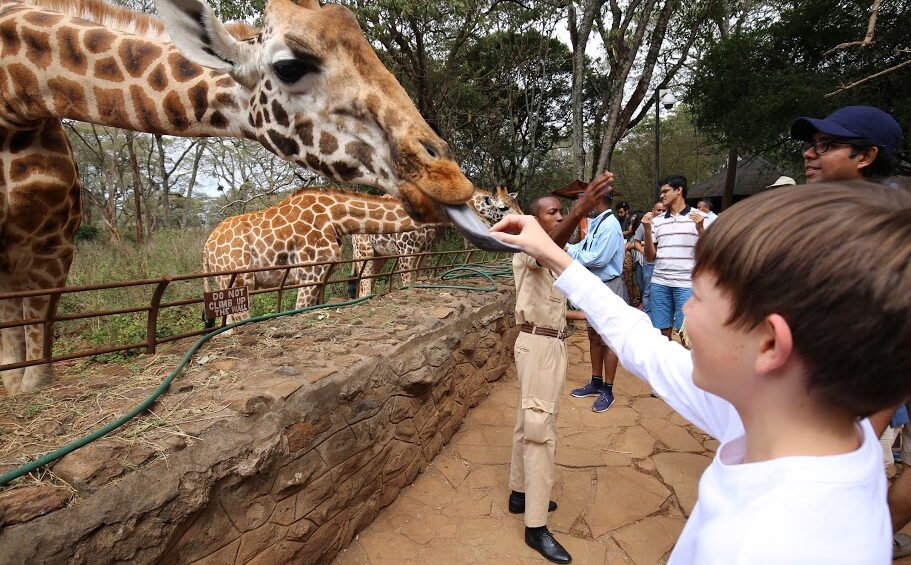
Begin your half-day tour with a trip to the Giraffe Center in  Nairobi. Admire the valuable work the non-profit organization is  attempting to stabilize the rare Rothschild’s giraffe population. Learn  how over 50 of the striking creatures have been released into the wild,  and see the young calves currently residing in the 120-acre (49 ha)  site.

Continue to the Karen Blixen Museum, former home of the Danish  novelist and author of Out of Africa. The building still houses many of  the original furnishings and some newer pieces donated by the makers of  the celebrated film. The museum adds further context to the movie,  providing a fascinating glimpse into East African colonial life in the  dying years of the British Empire.

Product details

This includes a visit to the famous Karen Blixen Museum, Giraffe Center and Daphne Shed-rick

Karen Blixen

– Its located 10km from the city center at the foot of Ngong hills Come and have a memorable experience at the museum

Here  we have guided tours where you will find a museum shop which offers  handicrafts, posters and postcards, the movie out of Africa, books and  other Kenyan souvenirs.

Giraffe Centre

It was established in  order to protect the endangered species of Rothschild giraffe, that is  found only in the grassland of East Africa. The main attraction for  visitors is feeding giraffes from a raised observation platform.

Daphne Shed rick Elephant Orphanage-

I  t was started to protect and rescue elephants. David Shed rick wildlife  trust is located within the Nairobi National Park and the sanctuary  cares for orphaned baby Elephants, tame black and white, Rhinos-calves  and adults. come see, feed and make friends with the elephants. Its an  experience that you never want to miss and one that you will never  forget.

KAZURI BEAD FACTORY & POTTERY CENTRE

The Kazuri  Bead factory and Pottery Centre is a good stop for those interested in  local crafts. The ceramic beads, pottery and leather goods are all  handmade by disadvantaged women. “Kazuri” means “small and beautiful” in  Swahili and was named by the founder when she started the company with  just two Kenyan employees in 1975. The factory now employs more than 300  women, all working hard but with great joy. You can get a tour of the  factory and watch the beads and pots get fired and glazed, it takes  about an hour in total. In the weekends the factory/workshop may be  closed, but the shop is still open, so you can purchase souvenirs. The  Bead Factory is a popular stop en route to, or from, the Karen Blixen  museum, and other sites in the Karen neighbourhood. Opening hours:  Monday – Saturday 8.30am – 6 pm, and Sundays from 9 am – 4 pm.

HIGHLIGHTS

•    Kenya’s wildlife & natural history within Nairobi

•    Insight into Out of Africa—a famous novel by Karen Blixen

•    Sets & scenery used in the distinguished motion picture

•    Effective breeding & conservation center for giraffes

•    Wonderful opportunity to safely interact with the creatures

INCLUSIONS

•    Admission fees

•    Roundtrip transportation to and from your central Nairobi hotel

•    Live tour commentary provided in English

The Great Rift Valley Lakes

The Rift Valley is one of the wonders of the world, stretching from the Middle East, down through Africa, reaching as far as Mozambique. The staggering view, as you approach from Nairobi, Kenya is quite unbelievable. The ground suddenly disappears from under you to show the huge expanse of the great rift, stretching for thousands of miles in either direction.

The first lake approached is the beautiful, deep-green Lake Naivasha.Lake Naivasha Basin holds two small National Parks, both of which are well worth a visit,ie Mount Longonot National Park is based around a young volcano, which rises up to 2,776 meters and Hell’s Gate National Park. Famous for its natural hot geysers, eagle and vulture breeding grounds, obsidian deposits and extinct volcanoes, it is possible to walk, game drive, camp, cycle and rock climb within the park. Beautiful rock gorges and natural steam vents add to the beauty of this tiny, 68 square km. Park. Game to view includes hyrax, buffalo, giraffe, eland, Hartebeest, lion and leopard. As with all of the Rift Valley Parks, Hell’s Gate is also an ornithologist’s dream. The cliffs of Hell’s Gate are the breeding grounds for vultures, Verreaux Eagles, Auger Buzzards and thousands of swifts.

Heading further northwest, Lake Nakuru is the next stop. This world famous Park was created to protect its stunning flocks of lesser flamingo, which literally turn the lake shore pink in color. The park spans an attractive range of wooded and bush grassland around the lake, offering a wide range of Eco-diversity. Notable game within the lake area is hippo and the diverse bird life. Both black and white rhino are now resident in the sanctuary and Rothschild giraffe, buffalo, impala, eland, warthog, Mountain Reedbuck, klipspringers and Black and White Colobus Monkeys are all plentiful. This park is world-renowned and is a beacon for ornithologists, scientists and wildlife filmmakers.

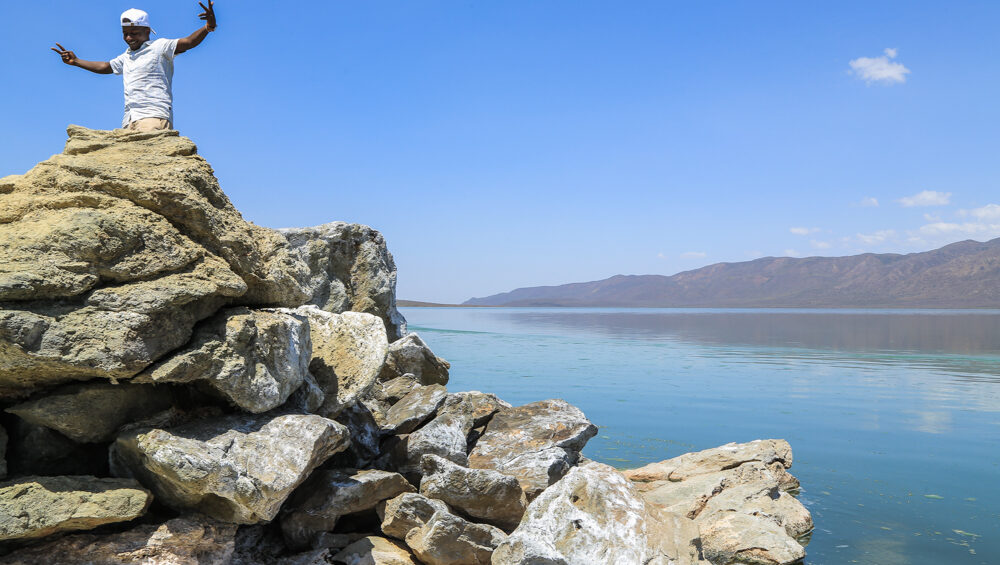
The next lake jewel scattered along the Rift Valley floor is Lake Bogoria. Most of this reserve is covered by the lake itself, which is a spectacular sight, reflecting searing blue skies and the rose pink of flamingo. With over 135 species of bird recorded, the area is of significant ornithological interest. As does Lake Nakuru, Bogoria waters grow rich blue-green algae, which seasonally attracts thousands of flamingos. The surrounding bushed grasslands are home to a number of animals, most notably the very rare Greater Kudu antelope.

The tiny Lake Kamnarok Reserve is the last stop on this circuit. Lake Kamnarok has a diverse landscape centred around a 4,000-foot deep valley with semi-tropical vegetation on the sides contrasting with the dry thorn bush at its base. Here you can find bush pigs, waterbuck, buffalo, elephant, pelicans and grebes.

As you travel through this small section of the entire Rift Valley with the rising Mau Escarpment on one side, and the Aberdare Mountains on the other, the lush, green forests of these mountain ranges frame the arid landscape of the Valley floor.

With a huge variety of landscapes, activities, accommodation and wildlife, the Rift Valley Lakes area is an excellent part of any safari holiday.

Things To Know About Uganda Gorilla Tracking Safari

It is now estimated that about 900 mountain gorillas are left in the world. Your desire for having a closer look at these wonderful primates can be successfully accomplished by making a visit to Uganda. Today numerous visitors from different corners of the world are coming to Uganda for witnessing the great apes in their natural habitat. This has made gorilla tracking as one of the leading tourism activity in Uganda. It is believed that Uganda acts as a home to over 400 gorillas. Before venturing out for gorilla tracking safari in Uganda, you need to be aware about some essential things, which is explained below:

What will be the best time for experiencing Uganda gorilla safari?
Gorilla tracking in Uganda can be successfully conducted at any time of the year. If you are interested in enjoying more adventurous experience then can opt for June to September and December to January- these are considered to be the peak season. At this time traffic to various parks increases; this results in costly gorilla permits compared to low seasons.

Where to enjoy a thrilling experience of gorilla tracking in Uganda?
One can enjoy Uganda gorilla safaris or Uganda gorilla safari tour at Bwindi Impenetrable National Park and Mgahinga Gorilla National Park. It is found that most visitors prefer Bwindi National Park to enjoy an exhilarating gorilla tracking because its gorillas are consistent.

Most popular destination for Uganda gorilla tracking enthusiasts, Bwindi National Park has the largest population of mountain gorillas in the world. Visitors have the choice of witnessing four habituated mountain gorilla groups like:

•    Mubare

•    Habinyanja

•    Rushegura

•    Nikuringo

Bwindi National Park is located about 500km from Kampala, the distance between Kampala and Bwindi takes about 6 to 8 hours of driving by road. One can also fly to an airstrip at Kisoro from Kampala or Entebbe and then drive to reach the Bwindi National Park.

Wear Smart for a Successful Gorilla Tracking in Uganda:

•    Carry a good pair of walking shoes for enjoying hiking or walking in the dense with an ease.

•    Have a pair of light clothes and make assure to avoid any bright color or shade of clothes.

•    Ensure in having a sunscreen lotion and a hat to escape the sun.

•    Keep some warm and waterproof clothes to deal efficiently with the wet and cold challenges while exploring the habitat of mountain gorillas.

Do Not Forget to Obtain a Gorilla Permit:
Generally the gorilla tracking permits are issued by the Ugandan Wildlife Authority at their offices in Kamwokya, a Kampala suburb. This may sound a bit tricky or complex process for tourists and visitors. In order to enjoy convenience of obtaining a gorilla permit, you can depend on Orange Adventures. we will obtain the permits in time on behalf of you that will help in avoiding any kind of inconvenience.

Gorilla tracking by Orange Adventures will help you experience a memorable trip with family or friends while witnessing a gorilla family in a breathtaking natural habitat.

For more details, stay social with us on Facebook.
https://www.facebook.com/orangeadventures/


Mammals Of Africa

Lions
FACT FILE:
Swahili Name:
Simba
Scientific Name:
Panthera leo
Size:
48 inches high
Weight:
330 to 500 pounds
Lifespan:
13 years in captivity
Habitat:
Grassy plans and open woodlands
Diet:
Carnivorous
Gestation:
About 105 days
Predators:
Humans
The lion is a magnificent animal that appears as a symbol of power, courage and nobility on family crests, coats of arms and national flags in many civilizations. Lions at one time were found from Greece through the Middle East to northern India, but today only a very small population remains in India. In the past lions lived in most parts of Africa, but are now confined to the sub-Saharan region.
Most cat species live a fundamentally solitary existence, but the lion is an exception. It has developed a social system based on teamwork and a division of labor within the pride, and an extended but closed family unit centered around a group of related females. The average pride consists of about 15 individuals, including five to 10 females with their young and two or three territorial males that are usually brothers or pride mates.
Physical Characteristics
Generally a tawny yellow, lions, like other species, tend to be lighter in color in hot, arid areas and darker in areas of dense vegetation. Mature male lions are unique among the cat species for the thick mane of brown or black hair that encircles the head and neck. The tails of lions end in a horny spine covered with a tuft of hair.
Habitat
Lions are found in savannas, grasslands, dense bush and woodlands.
Behavior
Females do 85 to 90 percent of the pride’s hunting, while the males patrol the territory and protect the pride, for which they take the “lion’s share” of the females’ prey. When resting, lions seem to enjoy good fellowship with lots of touching, head rubbing, licking and purring. But when it comes to food, each lion looks out for itself. Squabbling and fighting are common, with adult males usually eating first, followed by the females and then the cubs.
Lions are the laziest of the big cats. They usually spend 16 to 20 hours a day sleeping and resting, devoting the remaining hours to hunting, courting or protecting their territory. They keep in contact with one another by roaring loud enough to be heard up to five miles away. The pride usually remains intact until the males are challenged and successfully driven away or killed by other males, who then take over. Not all lions live in prides. At maturity, young males leave the units of their birth and spend several years as nomads before they become strong enough to take over a pride of their own. Some never stop wandering and continue to follow migrating herds; but the nomadic life is much more difficult, with little time for resting or reproducing.
Within the pride, the territorial males are the fathers of all the cubs. When a lioness is in heat, a male will join her, staying with her constantly. The pair usually mates for less than a minute, but it does so about every 15 to 30 minutes over a period of four to five days.
Lions may hunt at any hour, but they typically go after large prey at night. They hunt together to increase their success rate, since prey can be difficult to catch and can outrun a single lion. The lions fan out along a broad front or semicircle to creep up on prey. Once with within striking distance, they bound in among the startled animals, knock one down and kill it with a bite to the neck or throat. Hunts are successful about half the time.
Diet
Cooperative hunting enables lions to take prey as large as wildebeests, zebras, buffaloes, young elephants, rhinos, hippos and giraffes, any of which can provide several meals for the pride. Mice, lizards, tortoises, warthogs, antelopes and even crocodiles also form part of a lion’s diet. Because they often take over kills made by hyenas, cheetahs and leopards, scavenged food provides more than 50 percent of their diets in areas like the Serengeti plains.
Caring for the Young
Litters consist of two or three cubs that weigh about 3 pounds each. Some mothers carefully nurture the young; others may neglect or abandon them, especially when food is scarce. Usually two or more females in a pride give birth about the same time, and the cubs are raised together. A lioness will permit cubs other than her own to suckle, sometimes enabling a neglected infant to survive. Capable hunters by 2 years of age, lions become fully grown between 5 and 6 years and normally live about 13 years.
Predators
Lions have long been killed in rituals of bravery, as hunting trophies and for their medicinal and magical powers. Although lions are now protected in many parts of Africa, they were once considered to be stock-raiding vermin and were killed on sight. In some areas, livestock predation remains a severe problem.
Did you know?
Most lions drink water daily if available, but can go four or five days without it. Lions in arid areas seem to obtain needed moisture from the stomach contents of their prey.
When males take over a pride, they usually kill the cubs. The females come into estrus and the new males sire other cubs.

Baboon
FACT FILE:
Swahili Name:
Nyani
Scientific Name:
Olive baboon (Papiocynocephalus anubis); yellow baboon (Papio ynocephalus cynocephalus)
Size:
14 to 30 inches at the shoulder
Weight:
50 to 100 pounds
Lifespan:
20 to 30 years
Habitat:
Savannas and woodlands
Diet:
Omnivorous
Gestation:
6 months
Predators:
Humans, leopards, cheetahs
The baboon, of all the primates in East Africa, most frequently interacts with people. Apart from humans, baboons are the most adaptable of the ground-dwelling primates and live in a wide variety of habitats. Intelligent and crafty, they can be agricultural pests, so they are treated as vermin rather than wildlife.
Physical Characteristics
The two most common baboons occur in East Africa, the olive baboon and the yellow baboon. The larger and darker olive baboon is found in Uganda, west and central Kenya and northern Tanzania. Smaller, more slender and lighter in color, the yellow baboon inhabits southern and coastal Kenya and Tanzania. Both types are “dogfaced,” but the yellow’s nose turns up more than the olive’s.
Habitat
Baboons are found in surprisingly varied habitats and are extremely adaptable. The major requirements for any habitat seems to be water sources and safe sleeping places in either tall trees or on cliff faces. When water is readily available, baboons drink every day or two, but they can survive for long periods by licking the night dew from their fur.
Behavior
Baboons usually leave their sleeping places around 7 or 8 a.m. After coming down from the cliffs or trees, adults sit in small groups grooming each other while the juveniles play. They then form a cohesive unit that moves off in a column of two or three, walking until they begin feeding. Fanning out, they feed as they move along, often traveling five or six miles a day. They forage for about three hours in the morning, rest during the heat of the day and then forage again in the afternoon before returning to their sleeping places by about 6 p.m. Before retiring, they spend more time in mutual grooming, a key way of forming bonds among individuals as well as keeping the baboons clean and free of external parasites.
Baboons sleep, travel, feed and socialize together in groups of about 50 individuals, consisting of seven to eight males and approximately twice as many females plus their young. These family units of females, juveniles and infants form the stable core of a troop, with a ranking system that elevates certain females as leaders. A troop’s home range is well-defined but does not appear to have territorial borders. It often overlaps with the range of other baboons, but the troops seem to avoid meeting one another.
When they begin to mature, males leave their natal troops and move in and out of other troops. Frequent fights break out to determine dominance over access to females or meat. The ranking of these males constantly changes during this period.
Males are accepted into new troops slowly, usually by developing “friendships” with different females around the edge of a troop. They often help to defend a female and her offspring.
Diet
Baboons are opportunistic omnivores and selective feeders that carefully choose their food. Grass makes up a large part of their diet, along with berries, seeds, pods, blossoms, leaves, roots, bark and sap from a variety of plants. Baboons also eat insects and small quantities of meat, such as fish, shellfish, hares, birds, vervet monkeys and young, small antelopes.
Caring for the Young
For the first month, an infant baboon stays in very close contact with its mother. The mother carries the infant next to her stomach as she travels, holding it with one hand. By the time the young baboon is 5 to 6 weeks old it can ride on her back, hanging on by all four limbs; in a few months it rides jockey style, sitting upright. Between 4 and 6 months the young baboon begins to spend most of its time with other juveniles.
Predators
The baboon’s major predators are humans. Knowing that humans can easily kill or injure them when they are in trees, baboons usually escape through undergrowth. Males may confront other predators like leopards or cheetahs by forming a line and strutting in a threatening manner while baring their large canines and screaming. Baboons are fierce fighters, but a demonstration such as this can put the predator on the run.
Did you know?
Nearly one-half the size of adult males, females lack the male’s ruff (long hairs around the neck), but otherwise they are similar in appearance.
Baboons use over 30 vocalizations ranging from grunts to barks to screams. Nonvocal gestures include yawns, lip smacking and shoulder shrugging.

Cheetah
FACT FILE:
Swahili Name:
Duma
Scientific Name:
Acinonyx jubatus
Size:
30 inches at the shoulder
Weight:
110 to 140 pounds
Lifespan:
10 to 20 years
Habitat:
Open plains
Diet:
Smaller antelopes
Gestation:
90 to 95 days
Predators:
Eagles, humans, hyenas, lions
The lion is said to be majestic, the leopard ferocious and shrewd. But elegant and graceful best describes the cheetah. The cheetah is smaller than the other two cats, but by far the fastest at speeds of 70 miles per hour it can run faster than all other animals.
Now restricted to sub-Saharan Africa, wild cheetahs once were found in most of Africa, the plains of southern Asia, the Middle East and India.
Physical Characteristics
The cheetah is built for speed. It has long, slim, muscular legs, a small, rounded head set on a long neck, a flexible spine, a deep chest, nonretractable claws, special pads on its feet for traction and a long, tail for balance. Although fast, the cheetah cannot run at full speed for long distances (100 yards is about the limit) because it may overheat.
Cheetahs have distinctive black “tear stripes” that connect from the inside corner of each eye to the mouth that may serve as an antiglare device for daytime hunting.
Habitat
Cheetahs are found in open and partially open savannas.
Behavior
Cheetah mothers spend a long time teaching their young how to hunt small live antelopes are brought back to the cubs and released so they can chase and catch them. Unlike most other cats, the cheetah usually hunts during daylight, preferring early morning or early evening, but is also active on moonlit nights.
Cheetahs do not roar like lions, but they purr, hiss, whine and growl. They also make a variety of contact calls, the most common is a birdlike chirping sound.
Diet
Once a cheetah has made a kill, it eats quickly and keeps an eye out for scavengers lions, leopards, hyenas, vultures and jackals will occasionally take away their kills. Although cheetahs usually prey on the smaller antelopes such as Thomson’s gazelles and impalas, they can catch wildebeests and zebras if hunting together. They also hunt hares and other small mammals and birds.
Although known as an animal of the open plains that relies on speed to catch its prey, research has shown that the cheetah depends on cover to stalk prey. The cheetah gets as close to the prey as possible, then in a burst of speed tries to outrun its quarry. Once the cheetah closes in, it knocks the prey to the ground with its paw and suffocates the animal with a bite to the neck.
Caring for the Young
With a life span of 10 to 12 years, the cheetah is basically a solitary animal. At times a male will accompany a female for a short while after mating, but most often the female is alone or with her cubs. Two to four cubs are born in a secluded place. Their eyes do not open for a week or two, and they are helpless at first. When the mother is hunting, she leaves them hidden, but by 6 weeks of age they are able to follow her. They are suckled for 2 to 3 months but begin to eat meat as early as 3 weeks.
By 4 months the cheetah cub is a tawny yellow and almost completely spotted; the tail has bands of black and by adulthood a white tip. The grayish mantle disappears more slowly; the last traces are still visible when the cubs are adult-sized at 15 months.
Predators
A shy creature that roams widely, the cheetah is not seen as easily as some other cats. Never numerous, cheetahs have become extinct in many areas, principally due to shrinking habitat, loss of species to prey upon, disease and a high rate of cub mortality. In some areas 50 to 75 percent of all cheetah cubs die before 3 months.
Did you know?
The name cheetah comes from an Indian word meaning “spotted one.”
The young cub has a long gray-blue coat and a black underbelly that rapidly lightens and becomes spotted.
Early peoples trained cheetahs for hunting, and many civilizations depicted them in their art and in written records.
Cheetahs were so popular that Akbar the Great of India was said to have kept a stable of about 1,000.

Elephant
FACT FILE:
Swahili Name:
Tembo or ndovu
Scientific Name:
Loxodonta africana
Size:
Up to 11 feet
Weight:
31/2 – 61/2 tons (7,000 13,200 lb)
Lifespan:
60 to 70 years
Habitat:
Dense forest to open plains
Diet:
Herbivorous
Gestation:
About 22 months
Predators:
Humans
The African elephant and the Asian elephant are the only two surviving species of what was in prehistoric times a diverse and populous group of large mammals. Fossil records suggest that the elephant has some unlikely distant relatives, namely the small, rodentlike hyrax and the ungainly aquatic dugong. They all are thought to have evolved from a common stock related to ungulates. In East Africa many well-preserved fossil remains of earlier elephants have aided scientists in dating the archaeological sites of prehistoric man.
Physical Characteristics
The African elephant is the largest living land mammal, one of the most impressive animals on earth.
Of all its specialized features, the muscular trunk is the most remarkable it serves as a nose, a hand, an extra foot, a signaling device and a tool for gathering food, siphoning water, dusting, digging and a variety of other functions. Not only does the long trunk permit the elephant to reach as high as 23 feet, but it can also perform movements as delicate as picking berries or caressing a companion. It is capable, too, of powerful twisting and coiling movements used for tearing down trees or fighting. The trunk of the African elephant has two finger-like structures at its tip, as opposed to just one on the Asian elephant (Elephas maximus).
The tusks, another remarkable feature, are greatly elongated incisors (elephants have no canine teeth); about one-third of their total length lies hidden inside the skull. The largest tusk ever recorded weighed 214 pounds and was 138 inches long. Tusks of this size are not found on elephants in Africa today, as over the years hunters and poachers have taken animals with the largest tusks. Because tusk size is an inherited characteristic, it is rare to find one now that would weigh more than 100 pounds.
Both male and female African elephants have tusks, although only males in the Asiatic species have them. Tusks grow for most of an elephant’s lifetime and are an indicator of age. Elephants are “right- or left-tusked,” using the favored tusk more often as a tool, thus, shortening it from constant wear. Tusks will differ in size, shape and direction; researchers use them (and the elephant’s ears) to identify individuals.
Although the elephant’s remaining teeth do not attract the ivory poacher, they are nonetheless interesting and ultimately determine the natural life span of the elephant. The cheek teeth erupt in sequence from front to rear (12 on each side, six upper and six lower), but with only a single tooth or one and a part of another, being functional in each half of each jaw at one time. As a tooth becomes badly worn, it is pushed out and replaced by the next tooth growing behind. These large, oblong teeth have a series of cross ridges across the surface. The last molar, which erupts at about 25 years, has the greatest number of ridges but must also serve the elephant for the rest of its life. When it has worn down, the elephant can no longer chew food properly; malnutrition sets in, hastening the elephant’s death, usually between 60 and 70 years of age.
The African elephant’s ears are over twice as large as the Asian elephant’s and have a different shape, often described as similar to a map of Africa. The nicks, tears and scars as well as different vein patterns on the ears help distinguish between individuals. Elephants use their ears to display, signal or warn when alarmed or angry, they spread the ears, bringing them forward and fully extending them. The ears also control body temperature. By flapping the ears on hot days, the blood circulates in the ear’s numerous veins; the blood returns to the head and body about 9 F cooler.
The sole of the elephant’s foot is covered with a thick, cushionlike padding that helps sustain weight, prevents slipping and deadens sound. When they need to, elephants can walk almost silently. An elephant usually has five hoofed toes on each forefoot and four on each hind foot. When it walks, the legs on one side of the body move forward in unison.
Sometimes it is difficult for the layman to distinguish between male and female elephants as the male has no scrotum (the testes are internal), and both the male and the female have loose folds of skin between the hind legs. Unlike other herbivores, the female has her two teats on her chest between her front legs. As a rule, males are larger than females and have larger tusks, but females can usually be identified by their pronounced foreheads.
Habitat
Elephants can live in nearly any habitat that has adequate quantities of food and water. Their ideal habitat consists of plentiful grass and browse.
Behavior
Elephants are generally gregarious and form small family groups consisting of an older matriarch and three or four offspring, along with their young. It was once thought that family groups were led by old bull elephants, but these males are most often solitary. The female family groups are often visited by mature males checking for females in estrus. Several interrelated family groups may inhabit an area and know each other well. When they meet at watering holes and feeding places, they greet each other affectionately.
Females mature at about 11 years and stay in the group, while the males, which mature between 12 and 15, are usually expelled from the maternal herd. Even though these young males are sexually mature, they do not breed until they are in their mid- or late 20s (or even older) and have moved up in the social hierarchy. Mature male elephants in peak condition experience an annual period of heightened sexual and aggressive activity called musth. During this period, which may last a week or even up to three to four months, the male produces secretions from swollen temporal glands, continuously dribbles a trail of strong-smelling urine and makes frequent mating calls. Females are attracted to these males and prefer to mate with them rather than with males not in musth.
Smell is the most highly developed sense, but sound deep growling or rumbling noises is the principle means of communication. Some researchers think that each individual has its signature growl by which it can be distinguished. Sometimes elephants communicate with an ear-splitting blast when in danger or alarmed, causing others to form a protective circle around the younger members of the family group. Elephants make low-frequency calls, many of which, though loud, are too low for humans to hear. These sounds allow elephants to communicate with one another at distances of five or six miles.
Diet
An elephant’s day is spent eating (about 16 hours), drinking, bathing, dusting, wallowing, playing and resting (about three to five hours). As an elephant only digests some 40 percent of what it eats, it needs tremendous amounts of vegetation (approximately 5 percent of its body weight per day) and about 30 to 50 gallons of water. A young elephant must learn how to draw water up into its trunk and then pour it into its mouth. Elephants eat an extremely varied vegetarian diet, including grass, leaves, twigs, bark, fruit and seed pods. The fibrous content of their food and the great quantities consumed makes for large volumes of dung.
Caring for the Young
Usually only one calf is born to a pregnant female. An orphaned calf will usually be adopted by one of the family’s lactating females or suckled by various females. Elephants are very attentive mothers, and because most elephant behavior has to be learned, they keep their offspring with them for many years. Tusks erupt at 16 months but do not show externally until 30 months. The calf suckles with its mouth (the trunk is held over its head); when its tusks are 5 or 6 inches long, they begin to disturb the mother and she weans it. Once weaned usually at age 4 or 5, the calf still remains in the maternal group.
Predators
Elephants once were common throughout Africa, even in northern Africa as late as Roman times. They have since disappeared from that area due to overhunting and the spread of the desert. Even though they are remarkably adaptable creatures, living in habitats ranging from lush rain forest to semidesert, there has been much speculation about their future. Surviving populations are pressured by poachers who slaughter elephants for their tusks and by rapidly increasing human settlements, which restrict elephants’ movements and reduce the size of their habitat. Today it would be difficult for elephants to survive for long periods of time outside protected parks and reserves. But confining them also causes problems without access any longer to other areas, they may harm their own habitat by overfeeding and overuse. Sometimes they go out of protected areas and raid nearby farms.
Did you know?
The elephant is distinguished by its high level of intelligence, interesting behavior, methods of communication and complex social structure.
Elephants seem to be fascinated with the tusks and bones of dead elephants, fondling and examining them. The myth that they carry them to secret “elephant burial grounds,” however, has no factual base.
Elephants are very social, frequently touching and caressing one another and entwining their trunks.
Elephants demonstrate concern for members of their families they take care of weak or injured members and appear to grieve over a dead companion.

Mountain Gorilla
FACT FILE:
Swahili Name:
Gorila or N’gagi
Scientific Name:
Gorilla gorilla beringei
Size:
Up to 6 feet tall
Weight:
300 to 425 pounds
Lifespan:
53 years in captivity
Habitat:
Dense forest, rain forest
Diet:
Vegetarian
Gestation:
Vegetarian
Predators:
Leopards, crocodiles, humans
Few animals have sparked the imagination of man as much as the gorilla, the largest of the living primates and the last member of the ape family known to science. Most gorillas live in inaccessible regions in various dense forests in tropical Africa, and only in the last 30 years have scientists learned details of their life in the wild.
A chain of eight volcanoes known as the Virunga Volcanoes runs through a western section of the Rift Valley, forming part of the border between Uganda, Democratic Republic of Congo (formerly Zaire) and Rwanda. These spectacular mountains and the nearby Bwindi Impenetrable National Park in Uganda are the last refuges of the most endangered of the gorilla subspecies, the mountain gorilla. Only about 630 of these individuals remain.
Physical Characteristics
The gorilla is massive, with a short, thick trunk and broad chest and shoulders. Its eyes and ears are dwarfed by its large head and hairless, shiny black muzzle. Older males develop a crown of muscle and hair that makes the head look even longer. The arms are longer than the stubby legs. The fully adult male mountain gorilla is twice as large as the female.
Habitat
The most serious threat to gorillas is habitat loss. The rich volcanic soil of the Virungas is as highly valued as farming land. In Rwanda, Uganda and Congo, a regional conservation program stressing the importance of maintaining the virgin forest watershed and the need to habituate some groups of gorillas for tourist visits has helped ease encroachment.
Behavior
The gorilla is shy and retiring rather than ferocious and treacherous. It usually seeks no trouble unless harassed but will valiantly defend its family group if threatened. Family groups are close-knit and may have up to 30 members, but even if smaller, the group usually consists of at least one older male, one or more females and a few juveniles.
Gorillas have strong attachments to members of their own group and even when groups meet and mingle and then subsequently part, each animal tends to remain with its respective unit. An adult male called a silverback named for the silvery gray hairs on its back normally leads each group, serving as its chief protector and defender. Gorillas continually wander through their home ranges of 10 to 15 square miles, feeding and resting throughout the day. Because gorillas are nomadic, they build new nests each day at dusk, constructing them of bent branches in a tree or of grasses on the ground.
A group’s hierarchy, ritualized behavior and bluff charges between males prevents conflict among and between groups. Gorillas scream, grab foliage and stuff it in their mouths, stand erect on their hind legs, tear up and throw plants, drum on the chest with hands or fists, stamp their feet, strike the ground with the palms of their hands and gallop in a mock attack on all fours.
Diet
Animals of this size need a lot of food, and the vegetarian gorilla is no exception. Although they eat a variety of plants, favorites include wild celery, bamboo, thistles, stinging nettles, bedstraw and certain fruit. These plants seem to provide sufficient moisture so that gorillas do not need water.
Caring for the Young
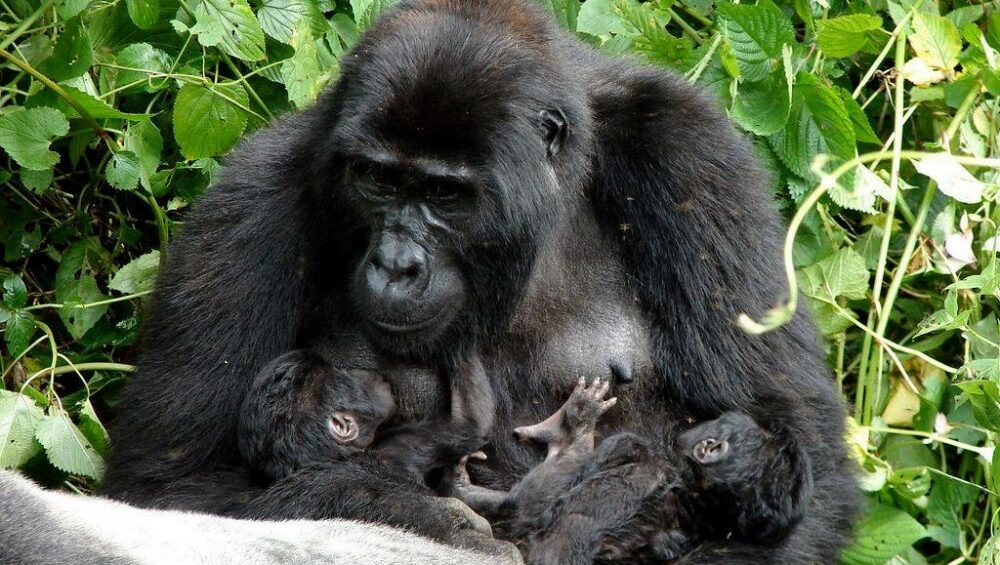
Mountain gorillas have a slow rate of reproduction. Females give birth for the first time at about age 10 and will have more offspring every three or four years. A male begins to breed between 12 and 15 years, when he is in charge of his own group. Able to conceive for only about three days each month, the female produces a single young.
Newborn gorillas are weak and tiny, weighing in at about 4 pounds. Their movements are as awkward as those of human infants, but their development is roughly twice as fast. At 3 or 4 months, the gorilla infant can sit upright and can stand with support soon after. It suckles regularly for about a year and is gradually weaned at about 31/2 years, when it becomes more independent.
Predators
The gorilla’s only known enemies are leopards and humans. Crocodiles are potentially dangerous to lowland gorillas. In western Africa, gorillas are commonly hunted for meat or in retaliation for crop raiding, but in eastern Africa they have been the victims of snares and traps set for antelope and other animals. Poachers have also destroyed entire family groups in their attempts to capture infant gorillas for zoos, while others are killed to sell their heads and hands as trophies.
Did you know?
Gorillas rarely attack humans. But in an encounter a person should stay still and refrain from staring or pointing at the gorilla.
Gorillas are susceptible to various parasites and diseases, especially to pneumonia during the long, cold wet seasons.

Grant’s gazelle
FACT FILE:
Swahili Name:
Swala Granti
Scientific Name:
Gazella granti
Size:
30 to 36 inches at the shoulder
Weight:
100 to 145 pounds
Lifespan:
12 years
Habitat:
Open grass plains
Diet:
Herbivorous/browsers/grazer
Gestation:
7 months
Predators:
Humans, all major predators
Grant’s gazelles resemble Thomson’s gazelles, and the two species are often seen together. They are similarly colored and marked, but Grant’s are noticeably larger than Thomson’s and easily distinguished by the broad white patch on the rump that extends upward, beyond the tail and onto the back. The white patch on the Thomson’s gazelle stops at the tail. Some varieties of Grant’s have a black stripe on each side of the body like the Thomson’s gazelle; in others the stripe is very light or absent. A black stripe runs down the thigh.
Physical Characteristics
The various types of Grant’s gazelle differ mainly in color and in the size and shape of the horns. Grant’s are large, pale, fawn-colored gazelles with long legs. The males are larger and heavier and their horns longer than the females.
The lyre-shaped horns are stout at the base, clearly ringed and measuring from 18 to 32 inches long. The width of the spaces between the horns and the angles of growth differ among the various types of Grant’s gazelles. One type, in northwest Tanzania, has widely diverging horns, with the tips directed downwards.
On the females black skin surrounds the teats, with white hair on the udder. This probably helps the young recognize the source of milk. When a fawn is older and moving about with its mother, the dark stripe on the white background may serve as a beacon for it to follow.
Habitat
Grant’s gazelles are especially fond of open grass plains, and although they frequent bushy savannas, they avoid areas of high grass.
Behavior
Grant’s gazelles may remain in areas where food is plentiful. Mature males establish territories they may hold as long as eight months. A male tries to detain the female herds of 10 to 25 individuals as they pass through these territories while they move about to feed. At the same time males chase off rival males and try to mate with females in estrus.
Grant’s gazelles have developed several ritualized postures. For example, the territorial male stretches and squats in an exaggerated manner while urinating and dropping dung. This apparently warns other males to stay away and reduces the number of confrontations. Younger males will fight, but as they grow older the ritualized displays often take the place of fights. When fighting does occur, it also is ritualized. It starts with “pretend” grooming, repeated scratching of the neck and forehead with a hind foot and presenting side views of the body. If neither combatant is intimidated, they may confront one another and clash horns, trying to throw the other off-balance.
Diet
The gazelles vary their diet according to the season. They eat herbs, foliage from shrubs, short grasses and shoots. Grant’s gazelles are not restricted to certain habitats by a dependency on water, but obtain the moisture they need from their food. Grant’s have unusually large salivary glands, possibly an adaptation for secreting fluid to cope with a relatively dry diet. They typically remain in the open during the heat of the day, suggesting an efficient system to retain the necessary fluid in their bodies.
Caring for the Young
Breeding is seasonal, but not firmly fixed. Gestation is approximately 7 months, and the young are born in areas that provide some cover. The newborn fawn is carefully cleaned by the mother who eats the afterbirth. Once the fawn can stand up and has been suckled, it seeks a suitable hiding place. The mother watches carefully and evidently memorizes the position before moving away to graze. She returns to the fawn three to four times during the day to suckle it and clean the area. The lying-out period is quite long-two weeks or more.
The fawn eats its first solid food at about 1 month, but is nursed for 6 months. Grant’s become sexually mature at about 18 months. By that time the young males will have joined an all-male bachelor herd, but it will be some time before they become territory holders, if at all. Males from the bachelor herds challenge the territorial males, but only the strongest win territories, which they mark with combined deposits of dung and urine.
Predators
All the major predators kill Grant’s gazelle, but cheetahs and African hunting dogs are the most prevalent. In some areas jackals prey on the young. Because of its adaptation to semi-arid and subdesert ranges as well as its good meat and valuable skin, Grant’s gazelle has been one of the species that scientists consider as a potential source of protein for humans.
Did you know?
The only relatively long-lasting relationship in gazelle society is that of a mother and her most recent offspring.
Grant’s are gregarious and form the usual social groupings of small herds of females with their offspring, territorial males and all-male bachelor groups. Membership in these groups is temporary.

Hartebeest
FACT FILE:
Swahili Name:
Kongoni
Scientific Name
Alcelaphus buselaphus
Size:
48 inches at the shoulder
Weight:
165 to 350 pounds
Lifespan:
12 to 15 years
Habitat:
Open plains
Diet:
Herbivorous/grazer
Gestation:
8 months
Predators:
Cheetahs, jackals, lions, hyenas, leopards,hunting dogs, humans
Coke’s hartebeest, also called kongoni, is the most widespread hartebeest. It is found on the open grassy plains and tree grasslands in southern Kenya and Tanzania.
Physical Characteristics
The hartebeest is a large, fawn-colored antelope that at first glance seems strangely misshapen and less elegant than other antelopes. Clumsy in appearance, it is hump-shouldered, with a steeply sloping back, slim legs and a long, narrow face. It is far from clumsy, however, and is in fact one of the fastest antelopes and most enduring runners. These qualities gave rise to the name “hartebeest,” which means “tough ox.”
Scientists differ about the classification of the hartebeest. Some consider the group to have several geographic representatives of the same species, while others think it represents different species. The shape of the horns and the color of the coat seem to be the most important diagnostic indicators. Hunter’s, Jackson’s, Lichtenstein’s and Coke’s hartebeest are found in East Africa.
Habitat
Hartebeest are mainly found in medium and tall grasslands, including savannas. They are more tolerant of high grass and woods than other alcelaphines (archetypical plains antelopes).
Behavior
The hartebeest is one of the most sedentary antelopes (making it easy to hunt), but it does move around more when larger groupings form during the dry seasons or in periods of drought, to seek water and better grazing. At other times the females form small groups of five to 12 animals that wander around their home range. Most mature males become solitary and spread out in adjoining territories. Hartebeests go to water regularly, but in some circumstances territorial males appear to go without drinking for rather long periods. The home ranges are usually densely populated. When a territorial male returns from watering, he may find another in his place.
Females are free to seek the best grazing in their home range, but males cannot leave their territories for long if they intend to keep them. Successful breeding only takes place within the territories-open, short-grass areas of ridges or rises on plateaus are the most favored spots. Males strenuously defend their territories; they often stand on open, elevated areas to keep a lookout for intruders. Should a territorial male be challenged, a fight may develop. Males are aggressive, especially so during breeding peaks. Like many antelopes, however, hartebeests have developed ways of fighting that determine dominance without many fatalities or serious injuries. A ritualized series of head movements and body stances, followed by depositing droppings on long-established dung piles that mark the territory’s borders, normally precede any actual clashing of horns and fighting. After the dominance ritual, one male may leave. If not, the hartebeest with its stout horns, short, strong neck and heavily muscled shoulders, is well-prepared for fighting. If the dispute over a territory is serious and both males are prepared to fight over it, severe injury may result.
Diet
The hartebeest feeds almost entirely on grass, but is not very selective and quite tolerant of poor-quality food. It has suffered from the expansion of cattle raising, as hartebeests and cattle compete for the same food.
Caring for the Young
The social organization of the hartebeest is somewhat different than that of other antelopes. Adult females do not form permanent associations with other adults; instead, they are often accompanied by up to four generations of their young. Female offspring remain close to their mothers up to the time they give birth to calves of their own. Even male offspring may remain with their mothers for as long as 3 years, considered an unusually long bonding period. As groups of females move in and out of male territories, the males sometimes try to chase away the older offspring. Their mothers become defensive and protect them from the males. Although bachelor herds of young males are also formed, they are less structured than those of some antelopes, and age classes are not as conspicuous.
Young are born throughout the year, but conception and breeding peaks may be influenced by the availability of food. The behavior of the female hartebeest when she gives birth is very different from that of the wildebeest. Instead of calving in groups on open plains, the hartebeest female isolates herself in scrub areas to give birth and leaves the young calf hidden for a fortnight, only visiting it briefly to suckle.
Predators
Juvenile mortality is thought to be relatively low, despite the number of potential predators. Cheetahs and jackals prey on small calves, while young and adult hartebeests are killed by lions, hyenas, leopards, hunting dogs and people.
Did you know?
The ancient Egyptians are said to have semidomesticated the hartebeest for use as a sacrificial animal. Because the species competes with cattle for food, further attempts at domestication are unlikely.
Although a prolific breeder and even a dominant species in some areas, the hartebeest has probably suffered the greatest reduction in range of all African ruminants

Hippo
FACT FILE:
Swahili Name:
Kiboko
Scientific Name:
Hippopotamus amphibius
Size:
13 feet long and 5 feet tall
Weight:
Up to 31/2 tons
Lifespan:
50 years
Habitat:
Rivers, swamps and protected areas
Diet:
Herbivorous
Gestation:
About 240 days
Predators:
Humans, lions, crocodiles
The hippopotamus, whose hide alone can weigh half a ton, is the third-largest living land mammal, after elephants and white rhinos. It was considered a female deity of pregnancy in ancient Egypt, but in modern times has been wiped out of that country because of the damage it inflicts on crops. The hippo continues to thrive in other parts of Africa.
Physical Characteristics
The hippo’s proportions reflect its sedentary, amphibious existence. Its plump and bulky body is set on short, stumpy legs, with each foot having four toes. Although webbed, the toes splay enough to distribute the weight evenly over each toe and therefore adequately support the hippo on land.
With very thick skin, especially over the back and rump, the grayish-brown body is almost completely hairless, with only a few bristles around the mouth and the tip of the tail. The hippo has neither sweat nor sebaceous glands but does have unique glands that produce a viscous red fluid, leading to the myth that hippos “sweat blood.” The hippo relies on water or mud to keep it cool, and the red fluid may have a similar function, but it is often produced in copious amounts when the animal is excited.
Habitat
Two hippo species are found in Africa. The large hippo, found in East Africa, occurs south of the Sahara. This social, group-living mammal is so numerous in some areas that “cropping” schemes are used to control populations that have become larger than the habitat can sustain. The other, much smaller (440 to 605 pounds) species of hippo is the pygmy hippopotamus (Choeropsis liberiensis). Limited to very restricted ranges in West Africa, it is a shy, solitary forest dweller, and now rare.
Behavior
The large hippo is an aggressive animal; old scars and fresh, deep wounds are signs of daily fights that are accompanied by much bellowing, neighing and snorting. Hippos have developed some ritualized postures the huge open-mouthed “yawn” that reveals formidable teeth is one of the most aggressive. With the long, razor-sharp incisors and tusklike canines, the hippo is well-armed and dangerous.
Hippos move easily in water, either swimming by kicking their hind legs or walking on the bottom. They are well-adapted to their aquatic life, with small ears, eyes and nostrils set at the top of the head. These senses are so keen that even submerged in water, the hippo is alert to its surroundings. By closing its ears and nostrils, the adult can stay under water for as long as six minutes.
Hippos have a flexible social system defined by hierarchy and by feed and water conditions. Usually they are found in mixed groups of about 15 individuals, but in periods of drought large numbers are forced to congregate near limited pools of water. This overcrowding disrupts the hierarchical system, resulting in even higher levels of aggression, with the oldest and strongest males most dominant. Hippos are unpredictable. If they are encountered away from the safety of water, anything that gets between them and their refuge may be bitten or trampled.
Diet
Amazingly agile for their bulk, hippos are good climbers and often traverse rather steep banks each night to graze on grass. They exit and enter the water at the same spots and graze for four to five hours each night in loop patterns, covering one or two miles, with extended forays up to five miles. Their modest appetites are due to their sedentary life, which does not require high outputs of energy.
Caring for the Young
A single young is born either on land or in shallow water. In water, the mother helps the newborn to the surface, later teaching it to swim. Newly born hippos are relatively small, weighing from 55 to 120 pounds, and are protected by their mothers, not only from crocodiles and lions but from male hippos that, oddly enough, do not bother them on land but attack them in water.
Young hippos can only stay under water for about half a minute, but adults can stay submerged up to six minutes. Young hippos can suckle under water by taking a deep breath, closing their nostrils and ears and wrapping their tongue tightly around the teat to suck. This procedure must be instinctive, because newborns suckle the same way on land. A young hippo begins to eat grass at 3 weeks, but its mother continues to suckle it for about a year. Newborns often climb on their mothers’ backs to rest.
Predators
Compared to other animals, hippos are not very susceptible to disease, so in suitable habitats, their numbers can increase quickly. Their chief predators are people, who may hunt hippos for their meat, hides and ivory teeth.
Did you know?
The name hippopotamus comes from the Greek “hippos,” meaning horse, these animals were once called “river horses.” But the hippo is more closely related to the pig than the horse.
Hippos spend most of their day in water close to shore lying on their bellies. In areas undisturbed by people, hippos lie on the shore in the morning sun.

Hyena
FACT FILE:
Swahili Name:
Fisi
Scientific Name:
Crocuta crocuta (spotted hyena)
Size:
28 to 35 inches tall
Weight:
90 to 190 pounds
Lifespan:
25 years in captivity
Habitat:
Savannas, grasslands, woodlands,
forest edges, subdeserts and
mountains to 13,000 feet
Diet:
Carnivorous
Gestation:
90 to 110 days
Predators:
Humans
The hyena is Africa’s most common large carnivore. Over the years hyenas and humans have come into close contact in Africa and, in earlier times, in Asia and in Europe, often leading to mutual predation. In ancient Egypt hyenas were domesticated, fattened and eaten, and in turn humans have on occasion become food for hyenas. Reputed to be cowardly and timid, the hyena can be bold and dangerous, attacking animals and humans.
Physical Characteristics
Of the three species of hyena in Africa, only the spotted hyena and the shy and much rarer, striped hyena (Hyaena hyaena) are found in East Africa. The smaller, and even shyer brown hyena (Hyaena brunnea) occurs only in southern Africa. Different from most other animals, female spotted hyenas are dominant over the males and outweigh them by about 3 pounds.
It is difficult to distinguish male and female hyenas by observation in the field. They are not hermaphrodites (having both male and female sexual organs), nor can they change their sex at will, as many people believe. Although the external female genitalia have a superficial similarity to those of the male, they are nonetheless female organs and only the females bear and nurse young. Why the female hyena developed in this manner is not known, but it may have been necessary for them to appear large and strong to protect their young from males, as hyenas have cannibalistic tendencies.
Habitat
Spotted hyenas are found in grasslands, woodlands, savannas, subdeserts, forest edges and mountains.
Behavior
Spotted hyenas are organized into territorial clans of related individuals that defend their home ranges against intruding clans. The center of clan activity is the den, where the cubs are raised and individuals meet. The den is usually situated on high ground in the central part of the territory. Its above-ground entrances are connected to a series of underground tunnels.
Hyenas mark and patrol their territories by depositing a strong-smelling substance produced by the anal glands on stalks of grass along the boundaries. “Latrines,” places where members of a clan deposit their droppings, also mark territories. The high mineral content of the bones hyenas consume make their droppings a highly visible, chalky white. Hyenas are social animals that communicate with one other through specific calls, postures and signals. They quickly make their various intentions known to other members of the clan, or to outsiders. When a hyena’s tail is carried straight, for example, it signals attack. When it is held up and forward over the back, the hyena is extremely excited. In contrast, it hangs down when the hyena is standing or walking leisurely. If frightened, the hyena tucks its tail between the legs and flat against the belly and usually skulks away.
Diet
The spotted hyena is a skillful hunter but also a scavenger. Truly an opportunistic feeder, it selects the easiest and most attractive food it may ignore fresh carrion and bones if there is, for example, an abundance of vulnerable wildebeest calves. It consumes animals of various types and sizes (including domestic stock and even other hyenas), carrion, bones, vegetable matter and other animals’ droppings. The powerful jaws and digestive tract of the hyena allow it to process and obtain nutrients from skin and bones. The only parts of prey not fully digested are hair, horns and hooves; these are regurgitated in the form of pellets. As hyenas hunt mostly at night and devour all parts, little evidence remains of their actual meals. Although they eat a lot of dry bones, they need little water.
Caring for the Young
Hyenas usually bear litters of two to four cubs, which, unlike the other two species, are born with their eyes open. Cubs begin to eat meat from kills near the den at about 5 months, but they are suckled for as long as 12 to 18 months, an unusually long time for carnivores. This is probably a necessity, as most kills are made far from the den, and hyenas, unlike jackals and hunting dogs, do not bring back food and regurgitate it for their young. At about 1 year, cubs begin to follow their mothers on their hunting and scavenging forays. Until then, they are left behind at the den with a babysitting adult.
Predators
Lions (who will attack them at every opportunity), hunting dogs and strange hyenas are among the species that prey on hyenas.
Did you know?
Hyenas make a variety of vocalizations, including wailing calls, howling screams and the well-known “laughter” used to alert other clan members up to three miles away of a food source.
Hyenas eat a great variety of animal products, vegetation and, according to campers, even aluminum pots and pans.

Leopard
FACT FILE:
Swahili Name:
Chui
Scientific Name:
Panthera pardus
Size:
About 28 inches at the shoulder
Weight:
Up to 140 pounds
Lifespan:
21 years in captivity
Habitat:
Bush and riverine forest
Diet:
Carnivorous
Gestation:
Approximately 21/2 months
Predators:
Humans
The most secretive and elusive of the large carnivores, the leopard is also the shrewdest. Pound for pound, it is the strongest climber of the large cats and capable of killing prey larger than itself.
Physical Characteristics
Leopards come in a wide variety of coat colors, from a light buff or tawny in warmer, dryer areas to a dark shade in deep forests. The spots, or rosettes, are circular in East African leopards but square in southern African leopards.
Habitat
Dense bush in rocky surroundings and riverine forest are their favorite habitats, but leopards adapt to many places in both warm and cold climates. Their adaptability, in fact, has helped them survive the loss of habitat to increasing human settlement. Leopards are primarily nocturnal, usually resting during the daytime in trees or thick bush. The spotted coat provides almost perfect camouflage.
Behavior
When a leopard stalks prey, it keeps a low profile and slinks through the grass or bush until it is close enough to launch an attack. When not hunting, it can move through herds of antelopes without unduly disturbing them by flipping its tail over its back to reveal the white underside, a sign that it is not seeking prey.
Leopards are basically solitary and go out of their way to avoid one another. Each animal has a home range that overlaps with its neighbors; the male’s range is much larger and generally overlaps with those of several females. A leopard usually does not tolerate intrusion into its own range except to mate. Unexpected encounters between leopards can lead to fights.
Leopards growl and spit with a screaming roar of fury when angry and they purr when content. They announce their presence to other leopards with a rasping or sawing cough. They have a good sense of smell and mark their ranges with urine; they also leave claw marks on trees to warn other leopards to stay away.
Leopards continually move about their home ranges, seldom staying in an area for more than two or three days at a time. With marking and calling, they usually know one another’s whereabouts. A male will accompany a female in estrus for a week or so before they part and return to solitude.
Diet
As they grow, cubs learn to hunt small animals. The leopard is a cunning, stealthy hunter, and its prey ranges from strong-scented carrion, fish, reptiles and birds to mammals such as rodents, hares, hyraxes, warthogs, antelopes, monkeys and baboons.
Caring for the Young
A litter includes two or three cubs, whose coats appear to be smoky gray as the rosettes are not yet clearly delineated. The female abandons her nomadic wandering until the cubs are large enough to accompany her. She keeps them hidden for about the first 8 weeks, giving them meat when they are 6 or 7 weeks old and suckling them for 3 months or longer.
Predators
Leopards have long been preyed upon by man. Their soft, dense, beautiful fur has been used for ceremonial robes and coats. Different parts of the leopard the tail, claws and whiskers are popular as fetishes. These cats have a reputation as wanton killers, but research does not support the claim. In some areas farmers try to exterminate them, while in others leopards are considered symbols of wisdom. Leopards do well in captivity, and some have lived as long as 21 years.
Did you know?
The elegant, powerfully built leopard has a long body, relatively short legs and a broad head. Its tawny coat is covered with dark, irregular circles called “rosettes.”
Both lions and hyenas will take away a leopard’s kill if they can. To prevent this leopards store their larger kills in trees where they can feed on them in relative safety.

Rhinoceros
FACT FILE:
Swahili Name:
Faru
Scientific Name:
Black (Diceros bicornis), white (Ceratotherium simum)
Size:
About 60 inches at the shoulder
Weight:
1 to 11/2 tons (black rhino), over 2 tons (white rhino)
Lifespan:
35 to 40 years
Habitat:
Grassland and open savannas
Diet:
Vegetarian
Gestation:
16 months
Predators:
Humans
The rhinoceros is a large, primitive-looking mammal that in fact dates from the Miocene era millions of years ago. In recent decades rhinos have been relentlessly hunted to the point of near extinction. Since 1970 the world rhino population has declined by 90 percent, with five species remaining in the world today, all of which are endangered.
The white or square-lipped rhino is one of two rhino species in Africa. It in turn occurs as two subspecies, the southern and the northern. The southern dwindled almost to extinction in the early 20th century, but was protected on farms and reserves, enabling it to increase enough to be reintroduced. The northern white rhino has recovered in Democratic Republic of Congo from about 15 in 1984 to about 30 in the late 1990s. This population, however, has recently been severely threatened by political conflict and instability.
Physical Characteristics
The white rhino’s name derives from the Dutch “weit,” meaning wide, a reference to its wide, square muzzle adapted for grazing. The white rhino, which is actually gray, has a pronounced hump on the neck and a long face.
The black, or hooked-lipped, rhino, along with all other rhino species, is an odd-toed ungulate (three toes on each foot). It has a thick, hairless, gray hide. Both the black and white rhino have two horns, the longer of which sits at the front of the nose.
Habitat
Black rhinos have various habitats, but mainly areas with dense, woody vegetation. White rhinos live in savannas with water holes, mud wallows and shade trees.
Behavior
Rhinos live in home ranges that sometimes overlap with each other. Feeding grounds, water holes and wallows may be shared. The black rhino is usually solitary. The white rhino tends to be much more gregarious. Rhinos are also rather ill-tempered and have become more so in areas where they have been constantly disturbed. While their eyesight is poor, which is probably why they will sometimes charge without apparent reason, their sense of smell and hearing are very good. They have an extended “vocabulary” of growls, grunts, squeaks, snorts and bellows. When attacking, the rhino lowers its head, snorts, breaks into a gallop reaching speeds of 30 miles an hour, and gores or strikes powerful blows with its horns. Still, for all its bulk, the rhino is very agile and can quickly turn in a small space. The rhino has a symbiotic relationship with oxpeckers, also called tick birds. In Swahili the tick bird is named “askari wa kifaru,” meaning “the rhino’s guard.” The bird eats ticks it finds on the rhino and noisily warns of danger. Although the birds also eat blood from sores on the rhino’s skin and thus obstruct healing, they are still tolerated.
Diet
The black rhino is a browser, with a triangular-shaped upper lip ending in a mobile grasping point. It eats a large variety of vegetation, including leaves, buds and shoots of plants, bushes and trees. The white rhino, on the other hand, is a grazer feeding on grasses.
Caring for the Young
The closest rhino relationship is between a female and her calf, lasting from 2 to 4 years. As the older calves mature, they leave their mothers and may join other females and their young, where they are tolerated for some time before living completely on their own.
Predators
Man is the cause of the demise of the rhino. In the wild, the adult black or white rhino has no true natural predators and, despite its size and antagonistic reputation, it is extremely easy for man to kill. A creature of habitat that lives in a well-defined home range, it usually goes to water holes daily, where it is easily ambushed. The dramatic decline in rhino numbers is unfortunate in an era of increasing conservation and wildlife awareness, but efforts are underway to save the rhino from extinction
Did you know?
The black rhino declined drastically in the 1970s and 1980s due to poaching. To prevent extinction, many rhinos were translocated to fenced sanctuaries in the early 1990s. This effort appears to be succeeding, as 1994 was the first time in 20 years that rhino numbers did not decline.
The rhino is prized for its horn. Not a true horn, it is made of thickly matted hair that grows from the skull without skeletal support. The major demand for horn is in Asia, where it is used in traditional medicine and ornamental carvings.

The Serengeti National Park

Director General
Tanzania National Parks [P. O. Box 3134, Arusha, Tanzania] Tel: +255272544082 Fax: +255272548216 Email: info@tanzaniaparks.com Website: www.tanzaniapark.com
Chief Park Warden
Serengeti National Park [P. O. Box 3134, Arusha, Tanzania] Tel:{Hotline} +255{0}689 062 243 / {0}767 536 125 Tel./Fax [Office]: +254{0}732 985 760 Tel./Fax [Tourism] +255{0}732 985 766 Email: serengeti@tanzaniaparks.com Website: www.tanzaniaparks.com

HISTORY

The name Serengeti comes from a Masai word “Siringit” referring to endless plains as you stand on the southern grass plains, you experience this vastness,and can witness one of the greatest concentrations of plain animals left on earth.
The plains were formed 3-4 million years ago when ash blown from volcanoes in the ngorongoro highlands covered the rolling landscape . This thick layer of ash preserved traces of early man, and established the rich soil which supports the southern grass plains. from this early beginning, man and wildlife have shared this magical place.
In recognition of the need to preserve this special area, the central Serengeti was declared a Game Reserve in 1929. In 1951, the reserve became Tanganyika’s first National Park, and in those days included Ngorongoro crater.
Further alteration in 1959 resulted on the park boundaries you see today. Part of the park plains and the highlands were removed and added to the Ngorongoro conservation Area, while extension to the North and South were included to provide more protection to wildebeest migration.
Covering 14,763 square kilometers, the park is roughly the size of Northern Ireland or Connecticut, making it Tanzania’s second largest national Park. Its the center of of the Serengeti ecosystem. Roughly defined by the annual wildebeest migration, the Serengeti ecosystems is expansive – and area of 25-3000 square kilometers. Its the combination of the park with its buffer zones- Ngorongoro Conservation areas, four Game reserves, one Game controlled Area and Kenya’s Masai Mara National Reserve- that protects the largest single movement of wildlife on Earth.
It was first inhabited by the ancient hunter gatherers and more recently pastorals. The plains were controlled by the Masai. There are early Masai rock paintings still visible at Moru, and a special rock used for making music! The colonist who arrived by the early 1900’s found a land virtually untouched, and exploited it for exceptional hunting opportunities, particularly lion, leopard, buffalo.
The Serengeti offers more than just annual migration. Its colorful topography of mountains, rolling hills, rivers and plains provide year round habitat for many of the Serengeti species.

WESTERN CORRIDOR [Grumeti]
Stretching almost to the shores of Lake Victoria, the reach of the western corridor is important in preserving ancient migratory routes. In a typical year, the migration arrives between June and July, having left the dry plains in the South. Here the migrants mix with herbivores, including topi, giraffe, and buffalo. There is also a resident population of wildebeest! Supporting the lush riverine forest, the Grumeti river provides a sharp contrast to the plains snd hosts some of the Serengeti’s more unusual species, such as the black and white Columbus monkeys. Its the rivers population of giant Nile crocodiles at Kirawira that has made this part famous. Growing up to 6meters in length and and with unussually thick set jaws, their lives are inextricably linked with the great migration. Moving with surprisingly stealth and speed, they prey upon the thirsty heads as they drink from the river. This time of plenty for the crocodiles will sustain them until the herds return next year.

KOPJES [Rocks]
The Serengeti would not be the same without the beautiful rock outcrops known as kopjes [pronounces ‘copy’ from the Dutch meaning “little head”. Technically known as inselbergs, the intriguing rounded shapes of these ancient granite rocks are the result of cracking and erosion from exposure to sun, wind, and rain. They provide shelter and capture water for a wealth of wildlife and plants. In fact, without such environs, lions and other large animals would be unable to survive the dry seasons on the plains. The main groups of kopjes are: Barafu, Loliondo, Simba and Moru Kopjes are outstanding for their size and profusion of resident wildlife including lion, leopard, serval, caracal and even rhinoceros and elephant. Gol and barafu kopjes provide important habitat for cheetah, and are used by wildebeest in the wet season. Maasai and Loliondo kopjes provide outlooks for resident  lion. and large cobras can oftenbe seen sunning themselves on the rocks. Simba kopjes supports a great variety of animals and birds including giraffe, baboon and lions [simba] for which they are named.

NORTHERN WOODLAND
Wildebeest move through the Northern woodlands in most years from June -December to feed on the longer grasses that persist in this area. Their range during this time extends north into Masai Mara. Rocky hills, rivers and woodlands typify this scenic area. Around October, nearly two million herbivores including wildebeest travel from the Northern hills towards the southern plains, crossing the Mara and Kirawira rivers, in pursuit of the rains in April, they return to the north through West, once again crossing the Mara and Kirawira rivers. This phenomenon is sometimes called the circular migration.

SOUTHERN PLAINS
The southern grass plains are some of the most productive and nutritious natural grassland in the world. When the short rains start in November, the wildebeest move south from the northern woodlands. They move to exploit the short grassplains, where the grasses are rich in the minerals they need to rear their young. In February/March one of the wildlife’s most amazing spectacle occurs. for 3-4 weeks, 90% of the female wildebeest give birth flooding the plains with thousands of newborn calves each day. The wildebeest may remain on the plains for several months, where they share these productive grasslands with migratory zebra, Thomson gazelle, and eland, as well as the many residents including the Grants gazelle, topi and hartebeest. The plains are also used by migratory birds including the white stock, pallid harrier, and peregrine falcon.
When the rains stop, the plains dry out rapidly forcing the herds to migrate west and north once again. Their departure in May/June marks another great spectacle. The wildebeest march in long, meandering lines that stretch for miles, or bunch into herds of thousands. These are the scenes that typify “the migration”. The southern plains are best visited from December to may when migrants are there.

SERONERA
The Seronera valley is an important transition zone between southern plains and the northern woodlands. It provides a rich mosaic of habitat criss -crossing by the rivers, the most prominent of which is Seronera river from which the area takes its name. With year round water, thi is perhaps the most reliable area in the park to view wildlife. Its possible to see many of the Serengeti resident wildlife including giraffe, buffalo, topi, hartebeest, waterbuck, impalla, reedbuck, bushbuck, dikdik, hippopotamus, crocodile, warthog and diverse bird-life. Large prides of lions reside here, as well as clans of spotted hyena. The most elusive leopard is also common here but less easy to spot! The river tracks offer the best chance to see a leopard, which usually rest in the branches of acacia or sausage trees. Cheetah can also be seen here as well as serval and caracal.


Gorilla Trekking Etiquette

Rules & Equipment

Read about rules and regulations to follow in order to enjoy a successful gorilla trek in Rwanda.

Find all the information about what equipment you need  and carry during a gorilla trekking expedition.

Gorilla trek briefing: All travelers are required to report for early briefing by RDB guides. Get brief vital  information about the life and health of the gorilla species, location and size of the park, weather predictions, potters and guards plus so much more.

Conservation/Eco Tourism

Ecotourism is nature-based tourism that meets conservation objectives and favours sustainable development. Your visit to the mountain gorillas helps contribute to their conservation and brings valuable resources to the people living around the national park. It is essential however, for certain regulations to be followed in order to ensure that the objectives of both conservation and sustainable development are met. Please read these regulations carefully and help contribute to the conservation of this valuable species and habitat.

Gorilla Trekking Equipment

  • Be ready for a wet and cold trek through the rainforest, therefore you will need a strong pair of hiking shoes, and warm water proof clothing.
  • Consider wearing pants and shirts that are bit long sleeved to avoid anything that can put a hamper your experience like stinging nettles.
  • Despite the cold temperature and altitudes, you need to be ready for strong sunshine at some point; therefore floppy hats and sunglasses can be of help, as are plenty of cold hydrating drinks. Sugary snacks are also good for a quick energy boost.
  • Make sure to carry water proof backpacks for your cameras because this is not the ideal time for a camera malfunction!! , binoculars are certainly not important to spot gorillas; you will need them in other sites while scoping for birds and distant animals.
  • While checking in at the park headquarters, you will be requested for identification by the park rangers and authority, therefore to avoid any hassles, carry your passport with you in addition to your tracking permit.
  • Do not worry about your backpack; porters are available for the trek although they are not always necessary. You are requested to pay a few dollars for their services. The drivers, guides and any porters will expect a tip and the amount is entirely up to you and also ultimately depending on the worth of service. However note in mind that the locals know that you are paying $750USD for an experience of gorilla viewing, so try not to be too stingy.

On the way to Gorillas

We are at the edge of the park. Before we enter the forest, it is important that you fully understand how to conduct yourselves in the forest and with the gorillas.

In order to minimise the behavioural disturbance to the gorillas, we have set limits on the numbers of visitors allowed. A maximum number of 8 people may visit the gorillas at a time,  These size limits serve to protect the gorillas from undue disturbance and the risk of exposure to human – borne diseases.
Once we enter the forest, we ask you to keep your voices low when speaking. This will help you observe other animals and birds in the forest. In addition to the mountain gorillas, other mammals you could observe include golden monkey, various species of antelope, bushbuck and buffalo.

From here we will walk to the area where the guides left the gorillas yesterday (ask the guides how long they estimate the walk will take). From there we will follow the gorillas’ trail to find them. If we pass the place where the group spent the night, you will be able to see their nests. Gorillas make a new nest each night.

There are stinging nettles and biting ants in the park. The guides will try to point them out, so that you can be careful not to get stung.

Please don’t leave any rubbish in the park. Take everything you brought into the forest back out with you. Put food, film boxes, handkerchiefs and rubbish back in your pockets or bags.

As we approach the gorillas, the guides will inform you to get your camera gear ready. The porters remain behind, so take everything you need in with you. Don’t leave any valuables with the porters.

When you are with the Gorillas!

All visitors should stay together in a tight group when near the gorillas. Please stay behind the guides at all times. The guides will keep you back at a  minimum of 7 meters from the gorillas. This is to protect them from the danger of catching human diseases and to minimise behavioural disturbance. Keep your voice down at all times. It is OK to ask questions.

* Please don’t point at the gorillas when walking, as they might think that you are throwing something at them. If nettles or ants sting you while you are with the gorillas, please try not to cry out   when taking photos, move slowly and carefully  Flash  Photography is not allowed . if some vegetation is in your way  Please don’t attempt to clear it by your self .ask one of your guides and  they will try to ensure you have a clear view if she/he feels  it will not disturb the gorillas . do not  try to touch gorillas . it is dangerous for them because of risk catching human deseases . It could also be dangerous for you. If one of the gorillas moves towards you, follow the example of the guides and move back slowly to a safe distance of 7 meters. Sometimes the animals charge, if a gorilla charges at you  please  follow  the guide’s example.

You should crouch down slowly, look down and wait for the animal to pass don’t’t attempt to take a photo at this time and do not run away as this could be very dangerous .

The maximum time that we will spend with the gorillas is one hour.

After your visit, please keep your voices down until you are 200 meters from the gorillas. If you want to stop for a picnic  or a rest, ask the guides to find a suitable place that is far enough from the gorillas.

Health Rules

Some of these rules are repeated above, to reinforce the point that the gorillas are extremely susceptible to human diseases and we need to minimise the risk that our visit potentially poses to them. Before we enter the park, it is important that we ask if anyone in the group of visitors is ill. If anyone of our visitors feels that he/she is ill or could be carrying a contagious disease, we ask that he/she volunteers to remain behind. You will be given a full reimbursement of the money that you paid to visit the gorillas. Once we enter the forest, if the guides find that you are ill, they have the right to refuse your visit to the gorillas and you will not be granted a reimbursement. This rule is necessary to protect the gorillas from the possibility of catching human diseases. Even the slightest common cold can be deadly to a gorilla.If you feel the urge to cough or sneeze while with the gorillas, please turn away from the animals and try to cover your nose and mouth to minimise the spread of bacteria or viruses that you might be carrying unknowingly.

Bring back….
DO NOT leave any rubbish in the park. Take care of your handkerchiefs, food wrappers, banana peels, etc. The objects might be of interest to the animals in the park and pose a disease threat. If you have to defacate while in the forest, please ask the guide to loan you his machete to dig a 30 cm  hole, and then fill it in when you are through. Faecal material can be higly infectious.
No smoking, drinking  or eating while with the gorillas.

Please respect the limits imposed on the number of visitors allowed with the gorillas each day. Keeping the numbers down and following the other health rules minimises the risk of disease transmission to this vulnerable population of mountain gorillas.